
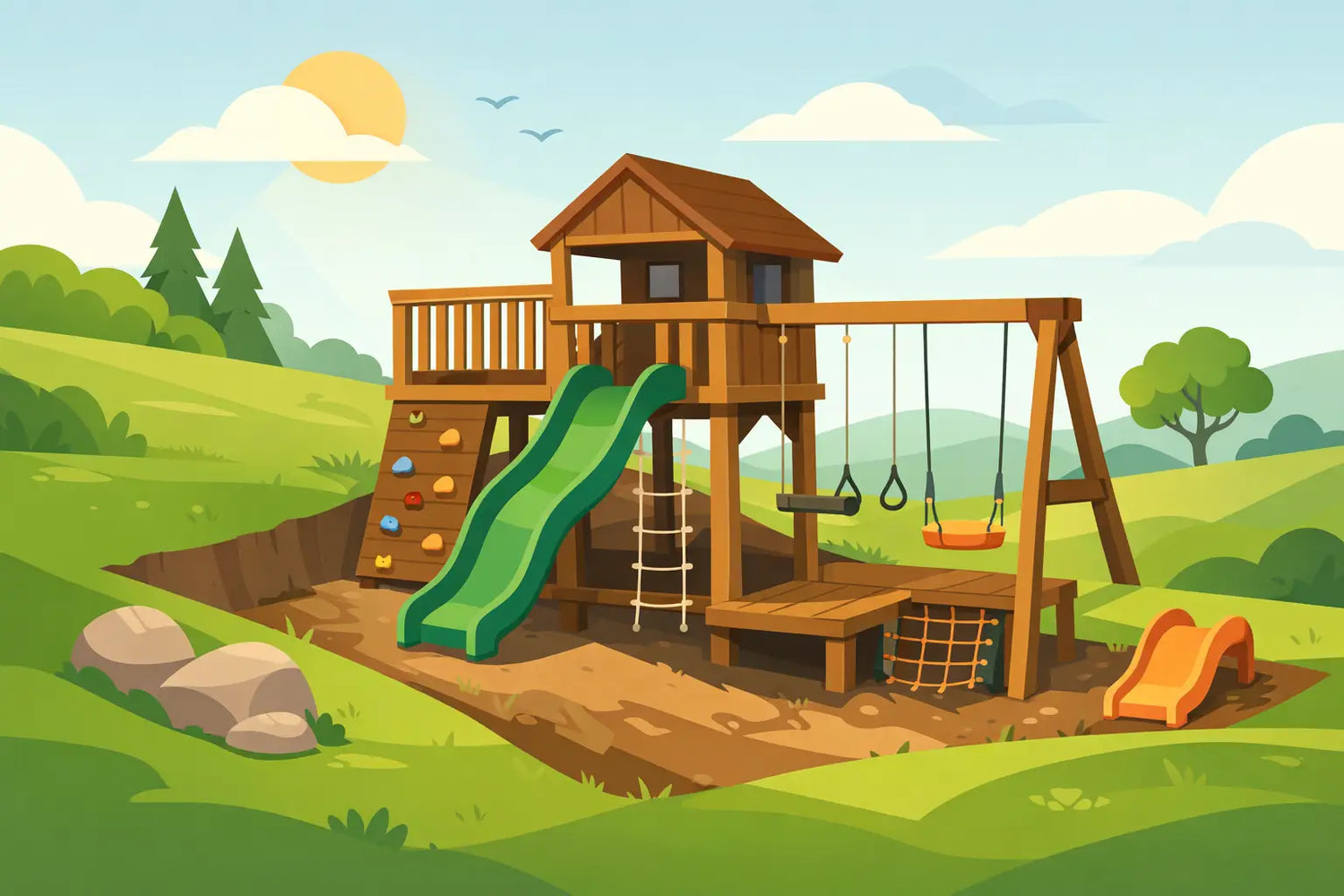
A sloped backyard does not have to end the search for a premium playset. An outdoor playset for an uneven yard can be a safe, long-lasting investment when the site is evaluated before the equipment is selected. The key is not forcing a playset onto a hill. It is creating a stable, well-drained play area that gives children room to climb, swing, and play with confidence.
For many North Carolina homeowners, a little grade is normal. Newer neighborhoods may have drainage swales, wooded lots can have rolling terrain, and backyards often slope away from the house. Those conditions call for thoughtful planning, not a one-size-fits-all installation.
Start With the Yard, Not the Playset
Before comparing towers, slides, and swing beam options, look closely at the section of the yard where the playset will live. A gentle, consistent slope is very different from a backyard with a sharp drop, a low area that holds water, or roots and exposed stone beneath the surface.
Measure the elevation change across the proposed footprint. A small change may be manageable with professional leveling and site preparation. A larger slope may require grading, a retaining solution, or selecting a different section of the yard. The right answer depends on the specific property, the size of the playset, the soil conditions, and how water moves after a heavy rain.
It also helps to consider the play zone around the structure. Children do not stay neatly inside the footprint of a playset. Swings, slide exits, monkey bars, and climbing features all need open clearance areas. Those surrounding spaces should be reasonably level and suitable for safety surfacing as well.
What Makes an Uneven Yard a Safety Concern?
Premium wooden playsets are engineered to sit on a properly prepared, level base. When a structure is installed out of level, its weight may not be distributed as intended. Over time, that can affect alignment, hardware tension, swing performance, and the overall feel of the structure.
An uneven site can also create less obvious problems. A slide may end higher or lower than expected. Swing paths can feel uneven. Children may land on a slope after coming off a slide or jumping from a platform. Water can collect beneath the playset, softening the ground and encouraging wear around support posts.
The goal is not perfection across the entire backyard. It is a stable, level installation zone with safe transitions into the surrounding play area. This is where professional site review becomes especially valuable. It can prevent a costly surprise on delivery day and help you choose a solution designed for years of family use.
Preparing the Ground for an Outdoor Playset for an Uneven Yard
Most uneven-yard projects begin with one of three approaches: minor leveling, targeted grading, or building a dedicated level play area. The best approach should preserve drainage while giving the playset a dependable base.
Minor leveling for gentle slopes
If the yard has only a modest slope, a professional installer may be able to prepare the site by removing high spots and filling low areas with compacted material. This is often the most straightforward option, but it still requires careful work. Loose soil or uncompacted fill can settle over time, particularly after periods of North Carolina rain.
Minor leveling works best when the grade change is small and the existing ground drains well. It may not be the right choice for a site that is already wet, heavily shaded, or prone to erosion.
Grading a dedicated play area
For a more noticeable slope, grading a defined play area can create a better long-term result. This may involve reshaping the ground so the installation area is level while directing water away from the structure and away from the home.
Grading should never create a new drainage issue at the edge of the playset. A flat pad with nowhere for water to go can become muddy quickly. A qualified site professional can help determine whether drainage improvements, such as a swale or other water-management solution, should be addressed before installation.
Retaining solutions for steeper backyards
When a hill is too steep to grade economically, a retaining wall or terraced play area may be worth considering. This can transform an underused portion of the yard into a polished outdoor space, but it is a larger landscape project. The wall must be designed to handle soil pressure and drainage correctly, and local permitting requirements may apply depending on the project.
For some families, moving the playset to a different area of the yard is the smarter and more cost-effective choice. A premium playset should fit the property, rather than turning a simple backyard upgrade into an unnecessary construction project.
Do Not Overlook Drainage and Soil
Central and Eastern North Carolina yards can have dense clay soil, which may drain slowly after storms. If water stands in the proposed location for more than a day or two, address that issue before installing a playset. Standing water can make surfacing messy, soften the soil beneath the structure, and create a less inviting place for children to play.
Watch the yard during or shortly after rainfall. Notice where downspouts discharge, where runoff enters from neighboring lots, and whether the lowest part of the yard stays damp. Avoid placing a playset directly in a drainage path or at the bottom of a slope where water naturally collects.
Tree roots deserve attention, too. Large roots can make leveling difficult and may continue to shift the ground over time. Cutting major roots can also harm mature trees, so this is another situation where choosing another site may be the better decision.
Choose Safety Surfacing That Fits the Site
Safety surfacing is part of the installation plan, not an afterthought. A level, contained surfacing area can help define the play zone and provide better impact attenuation beneath active features. The right material depends on the equipment, the site, maintenance expectations, and the family’s preferences.
Loose-fill materials can work well when installed at the appropriate depth and maintained regularly. They need a border or containment system, especially on a slope, to keep material from washing or migrating downhill. Engineered wood fiber is a popular choice for residential and commercial play areas because it offers a natural appearance and can be replenished as needed.
Rubber surfacing may be appealing for its clean appearance and lower day-to-day maintenance, but it requires correct base preparation and can represent a higher upfront investment. Grass alone is usually not an ideal landing surface beneath swings and high-activity play components, particularly in the high-traffic areas where turf quickly wears away.
Plan for Access, Delivery, and Installation
A beautiful site on the far side of a backyard still needs a practical path for delivery and installation. Consider gates, fences, landscaping, utility boxes, overhead branches, and the route from the driveway to the play area. Large premium play systems include substantial components, and professional installation is smoother when access is planned early.
It is also wise to locate underground utilities before any digging, grading, or anchoring work begins. Irrigation lines, landscape lighting, drainage pipes, and buried cables can all affect site preparation.
For homeowners in the Raleigh, Cary, Durham, and greater Eastern North Carolina area, an experienced local team can help identify these details before the equipment arrives. Rainbow Play of NC provides the benefit of product expertise and professional installation guidance, helping families match the right playset to the realities of their backyard.
When a Sloped Yard May Not Be the Right Fit
There are situations where a traditional large playset may not be the best choice for a particular space. A severe slope, unstable soil, frequent flooding, limited clearance, or a property with a septic field can make installation impractical or require substantial site work.
That does not mean outdoor fun is off the table. Depending on the yard, a trampoline in an appropriate location, an in-ground basketball goal, or a smaller play feature may better suit the landscape. The best backyard solution balances the way your family wants to play with what the property can safely support.
A well-prepared site gives a premium playset the foundation it deserves. Take a few extra steps before purchase, ask for expert guidance, and let the shape of your yard inform the plan. The result can be a backyard where the hill is simply part of the view, not a barrier to play.