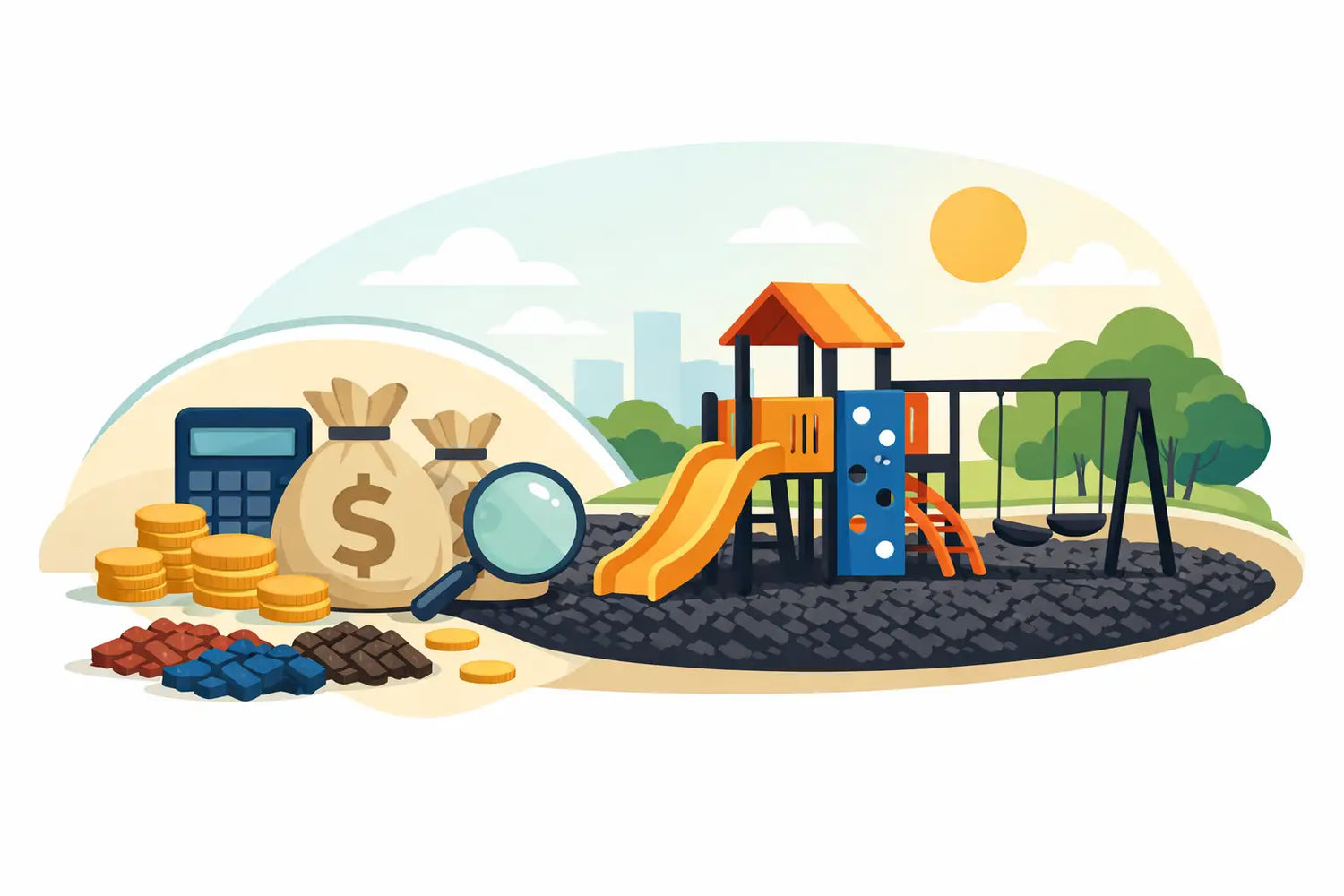
A new playset can transform a backyard, but the ground beneath it deserves just as much attention as the swing set itself. If you are asking how much does rubber mulch cost, expect most residential playground projects to fall between roughly $1,000 and $4,000 for material, depending on the play area size, chosen depth, color, and whether professional installation is included.
Rubber mulch is a premium playground surfacing choice. It offers excellent durability, strong drainage, and a polished finished look that does not break down like wood mulch. The right budget starts with more than a per-bag price, though. You also need to account for safety depth, site preparation, borders, freight, and the amount of material required to protect the area around your play equipment.
How Much Does Rubber Mulch Cost Per Square Foot?
For playground-grade rubber mulch, material commonly costs about $3 to $8 per square foot at a typical 6-inch depth. That is a useful planning range, but actual pricing can move up or down based on product quality, order size, delivery distance, and local availability.
Small bags are convenient for topping off a compact play area, but they usually carry the highest cost per pound. Bulk orders are often the better value for a full backyard playground. A 40-pound bag may cover only a few square feet at a safety-conscious depth, which surprises many homeowners who initially price a project by bag count alone.
For a practical example, consider a 20-by-20-foot play zone. That 400-square-foot area may need about 6 inches of loose-fill rubber mulch for many residential playset applications. Material alone could reasonably range from about $1,200 to $3,200, before borders, delivery, or installation. A larger 30-by-30-foot area can require more than twice that material, even though it may surround only one play system.
The best way to avoid underordering is to measure the full use zone, not just the footprint of the playset. Swings, slides, climbers, and monkey bars all need clear space around them. A safe surfacing plan should cover the areas where a child is most likely to land.
What Changes the Cost of Rubber Mulch?
Rubber mulch is not a one-price product. Several project decisions affect the final investment, and some are far more important than others when safety is the goal.
Required depth and fall height
Depth is one of the biggest cost drivers. The higher the potential fall height from the equipment, the more impact attenuation the surfacing must provide. Many residential play areas use a 6-inch depth as a starting point, while taller equipment or commercial applications may call for a deeper system based on the product specifications and intended use.
Do not choose depth by appearance alone. Rubber mulch may look full at a shallower level, but a thinner layer can reduce the protective benefit your children need beneath elevated play features. Follow the surfacing manufacturer’s tested fall-height guidance and the play equipment manufacturer’s recommendations.
Playground-grade product quality
Not all rubber mulch is designed for the same purpose. Decorative landscape rubber mulch may be fine around flower beds, but a playground surfacing product should be selected for impact performance, cleanliness, drainage, and intended use under play equipment.
Premium products may cost more upfront because they are screened for consistent sizing, made with durable color coatings, and designed to stay resilient through outdoor conditions. For families making a long-term investment in a premium playset, that consistency is usually worth considering.
Color selection
Black rubber mulch is often the most economical option. Brown, cedar-toned, red, blue, green, and blended colors may add to the price. Color can make a meaningful difference in the final look of a backyard play area, especially when you are coordinating with fencing, landscaping, or the finish of a wooden play system.
There is a practical consideration, too. Darker colors can feel warmer in direct summer sun. In sunny North Carolina yards, shade patterns and the way children will use the space can be just as relevant as matching the mulch to the house.
Delivery and installation
Rubber mulch is heavy. Freight or local delivery can be a significant line item, particularly for small orders or homes with limited access. A bulk delivery may be more cost-effective than buying many bags, but you will need a plan for moving the material from the drop point to the playground area.
Professional installation adds to the initial cost, yet it can save time and prevent common issues such as inadequate depth, uneven coverage, poor drainage, or mulch spreading beyond the play zone. Installation pricing varies by access, excavation needs, border design, and whether an old surface must be removed first.
Budget for the Full Playground Surface, Not Just Mulch
A dependable rubber mulch installation begins with a prepared area. The mulch is the visible component, but the supporting details are what help it perform well over time.
A containment border is typically necessary to hold loose-fill surfacing at the intended depth. Options can include landscape timbers, composite edging, curbing, or purpose-built playground borders. The border should be high enough to contain the mulch while allowing appropriate access to the play area.
A weed barrier may be appropriate in some yards, although it should not interfere with drainage. Base preparation also matters. The area should be graded so water moves away from the home and does not create standing water beneath the play zone. If the existing ground is uneven or heavily compacted, site work can add to the project budget.
For an installed backyard rubber mulch playground, a realistic all-in planning range is often $5 to $12 or more per square foot. A simple, accessible site with basic borders will be closer to the lower end. A larger area with excavation, custom edging, delivery challenges, and professional labor will be toward the higher end.
Rubber Mulch vs. Wood Mulch: Is the Higher Price Worth It?
Rubber mulch generally costs more than engineered wood fiber or traditional wood mulch at the time of purchase. For some families, wood fiber is a sensible choice because it has a lower initial material cost and a natural look. It does, however, compact, decompose, scatter, and require regular replenishment.
Rubber mulch does not rot, attract insects in the way organic mulch can, or require annual replacement because of decomposition. It also drains efficiently and tends to hold its depth better than wood-based loose fill. Those benefits can reduce maintenance over the life of the playground, though rubber mulch can still shift and should be raked back into place periodically.
The trade-off is clear: rubber mulch asks for a greater upfront investment. It may be the better fit when you want a long-lasting surface with less frequent replacement, especially under a premium swing set that your family expects to enjoy for many years. Wood fiber may be the right choice when initial budget is the deciding factor or when a natural material is preferred.
How to Estimate the Right Amount
Start by measuring the length and width of the complete play area in feet. Multiply those numbers to find square footage. Then choose the depth recommended for your equipment and selected surfacing product. A surfacing supplier or playground professional can convert those measurements into the number of bags or bulk quantity needed.
Leave room in your budget for a little extra material. Loose-fill surfacing settles and shifts with play, and having reserve mulch makes future touch-ups easier. More importantly, do not reduce the required depth simply to lower the purchase price. A smaller play zone with the correct protective depth is usually a better decision than a larger area with insufficient surfacing.
For families planning a new backyard play space, Rainbow Play of NC can help align the playset, use zone, and surfacing plan before installation day. Seeing equipment in person and discussing your yard’s layout can make the investment feel much more straightforward.
A well-designed play area is not just about what children climb on. It is about giving them a safer, more comfortable place to run, swing, and play hard for years to come.