
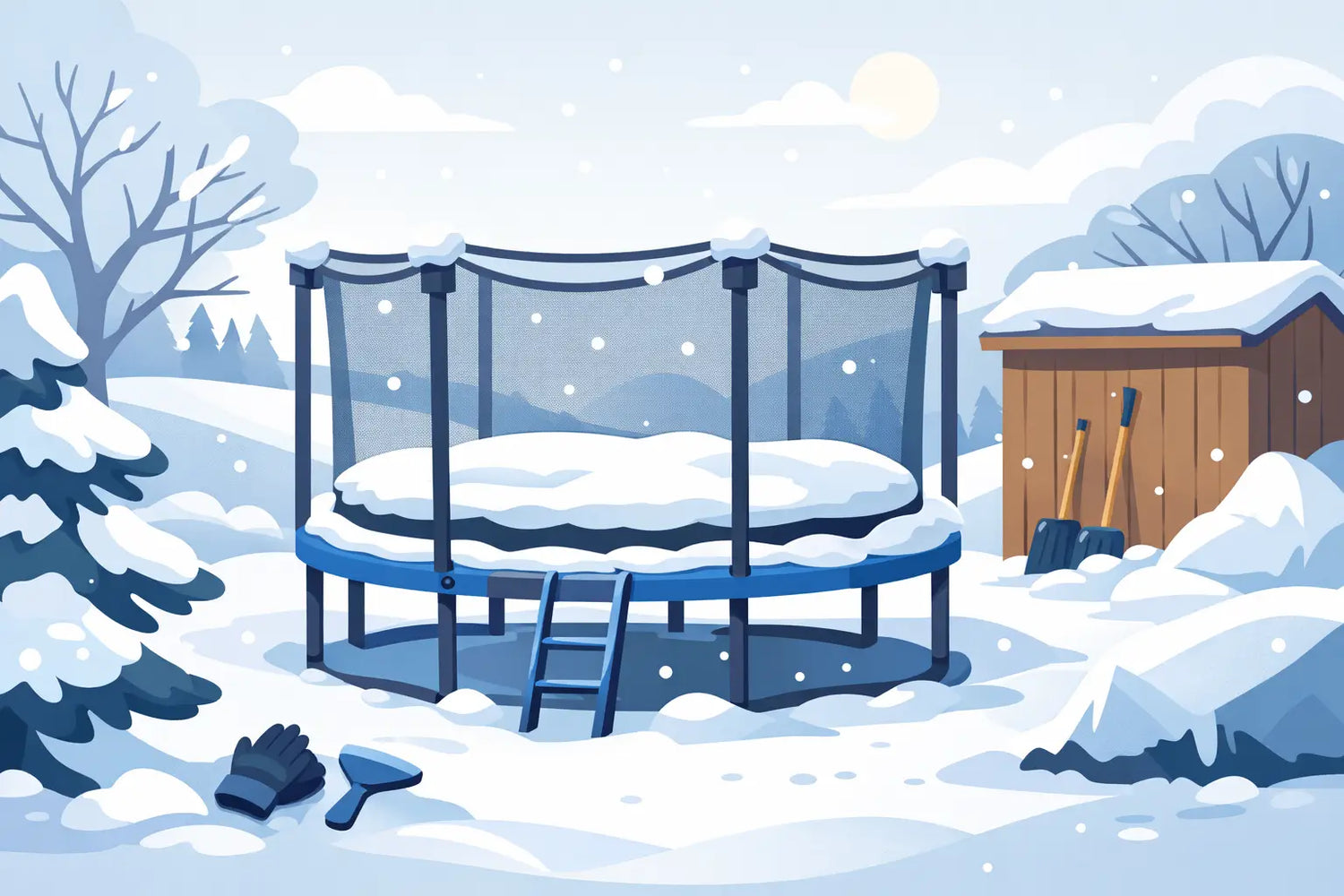
A cold, rainy week can put more stress on a trampoline than a sunny month of backyard play. In North Carolina, winter rarely means months of deep snow, but repeated rain, freezing temperatures, wind, falling branches, and wet leaves can still affect a trampoline’s frame, mat, springs, and enclosure. Knowing how to maintain an outdoor trampoline in winter helps protect the premium equipment your family depends on when warm-weather bouncing returns.
The right plan depends on your trampoline model, where it sits in the yard, and whether it will be used during the season. A quality trampoline is designed for outdoor conditions, but it is not maintenance-free. A few consistent checks can preserve its performance, safety, and long-term value.
Start With Your Trampoline Manufacturer’s Guidance
Before removing parts or installing a cover, review the owner’s manual for your specific trampoline. Manufacturers may have different recommendations for enclosure nets, pads, spring protection, and winter storage. Following those instructions matters for both safe use and warranty coverage.
For many North Carolina families, leaving a well-built trampoline assembled through winter is practical. Heavy snow accumulation is less common here than in northern states, and disassembling a large trampoline every year can be unnecessary. Still, a trampoline exposed to a particularly windy property, a wooded yard, or a location that collects standing water may need more active protection.
If your trampoline is in an open area, confirm that it is properly anchored. Winter storms can bring strong gusts, and a trampoline that shifts even a few inches may have bent frame sections, damaged legs, or compromised connections. Anchors should be secure in the ground and checked after major storms, not simply installed once and forgotten.
Clear Rain, Leaves, and Debris Promptly
Water is one of the biggest winter concerns for an outdoor trampoline. Rainwater can pool on the jumping mat, adding unnecessary weight and stretching the mat material over time. If temperatures drop overnight, standing water can freeze and place additional strain on the frame and springs.
After a storm, use a soft broom or a pump designed for trampoline use to remove pooled water. Never use a sharp tool, shovel, or stiff metal rake on the mat. These can cut or puncture the jumping surface, creating a serious safety issue that may not be obvious until someone begins to bounce.
Leaves, pine needles, acorns, and small branches should also be removed regularly. Organic debris traps moisture against the mat and safety pads, which can encourage mildew and make materials stay wet longer. It can also hide tears, loose stitching, or animal damage that should be addressed before the trampoline is used again.
If branches hang over the trampoline, winter is a smart time to have them evaluated or trimmed. Falling limbs are a risk to children, adults, and premium backyard equipment alike. Keeping the area above and around the trampoline clear is one of the simplest ways to prevent avoidable damage.
Inspect the Frame, Springs, and Pads
A short inspection every few weeks is far easier than discovering a larger issue at the first spring playdate. Begin with the frame. Look for separated joints, bent tubing, loose bolts, chipped finish, or early signs of rust. Surface marks can often be cleaned and monitored, but structural damage calls for replacement parts or professional guidance before the trampoline is used.
Next, check the springs or spring system. Traditional springs should be evenly attached and free from visible gaps, stretching, or corrosion. A spring that has detached, shifted, or rusted significantly can affect the way the mat responds and may place uneven stress on surrounding components.
Safety pads deserve close attention because they help cover the frame and springs. Inspect for cracking vinyl, waterlogged foam, loose ties, torn seams, and areas that no longer stay in place. Premium pads are built to handle outdoor use, but winter moisture and sun exposure can gradually wear them down. If pads no longer provide reliable coverage, replace them before regular use resumes.
A gentle wipe-down with mild soap and water can remove dirt and pollen. Avoid harsh chemicals, abrasive cleaners, and pressure washing. These may damage protective coatings, stitching, or the materials intended to withstand everyday backyard conditions.
Decide Whether to Use a Winter Cover
A trampoline cover can be helpful, but it is not automatically the best choice for every setup. A properly fitted cover can reduce debris buildup and limit direct exposure to rain. It is especially useful when a trampoline will not be used for several weeks and is positioned away from areas where water tends to collect.
The trade-off is airflow. A cover that traps moisture can create condensation beneath it, particularly during North Carolina’s damp winter stretches. That moisture can contribute to mildew, corrosion, and premature pad wear. If you use a cover, choose one made for your trampoline’s size and design, secure it according to its instructions, and remove it periodically to inspect for trapped water or debris.
Do not place a loose tarp over the trampoline and assume the job is done. Tarps can catch wind, hold pools of water, and rub against the mat or enclosure. They may also create an attractive sheltered space for rodents or other animals. A fitted accessory is the safer option when a cover is appropriate.
Protect the Safety Enclosure From Wind Damage
The enclosure net is an essential safety feature, and wind is often harder on it than cold temperatures. Inspect netting for holes, frayed edges, loose straps, and weakened attachment points. Check that enclosure poles are stable and that protective sleeves or foam covers remain in good condition.
Whether to remove the net for winter depends on the model and manufacturer guidance. In an exposed, windy yard, removing and storing the enclosure can reduce the risk of wind damage. In a more sheltered location, leaving a properly secured net installed may be more convenient. If you remove it, make sure it is completely dry before folding and storing it in a clean, dry location away from pests.
Never allow children to use a trampoline without its safety enclosure and protective padding properly installed. If any component has been removed for winter storage, the trampoline should stay out of use until it is fully reassembled and inspected.
Set Simple Rules for Winter Use
A dry winter afternoon can be a great time for kids to get outside and burn energy, but winter trampoline use needs a little more caution. The jumping mat should be fully dry and free of frost, ice, leaves, or standing water. Even a thin layer of moisture can make the surface slippery and unpredictable.
Keep the same core safety rules in place: one jumper at a time, adult supervision for younger children, no flips unless a trained spotter and appropriate setup are present, and no shoes, toys, or food on the trampoline. Cold weather can make hands less responsive and surfaces less forgiving, so it is wise to keep sessions shorter when temperatures are low.
Parents should also watch for wet grass and mud around the trampoline. The equipment may be ready for play, but a slick approach area can lead to slips while children climb on or off. A clear, stable landing zone is part of a safe trampoline environment.
Plan a Spring Readiness Check
Winter maintenance pays off when spring arrives. Before returning to frequent use, complete a more thorough inspection of the mat, frame, springs, pads, enclosure, ladder, anchors, and surrounding ground. Test that every connection is secure and that the mat has even tension. Replace worn or damaged components rather than trying to extend their life beyond safe use.
For homeowners who want confidence from the start, Rainbow Play of NC can help families choose premium backyard play equipment built for lasting outdoor enjoyment, along with knowledgeable local support and professional installation. A quality trampoline is a meaningful backyard investment, and caring for it through winter helps keep the fun ready for the next bright North Carolina afternoon.