
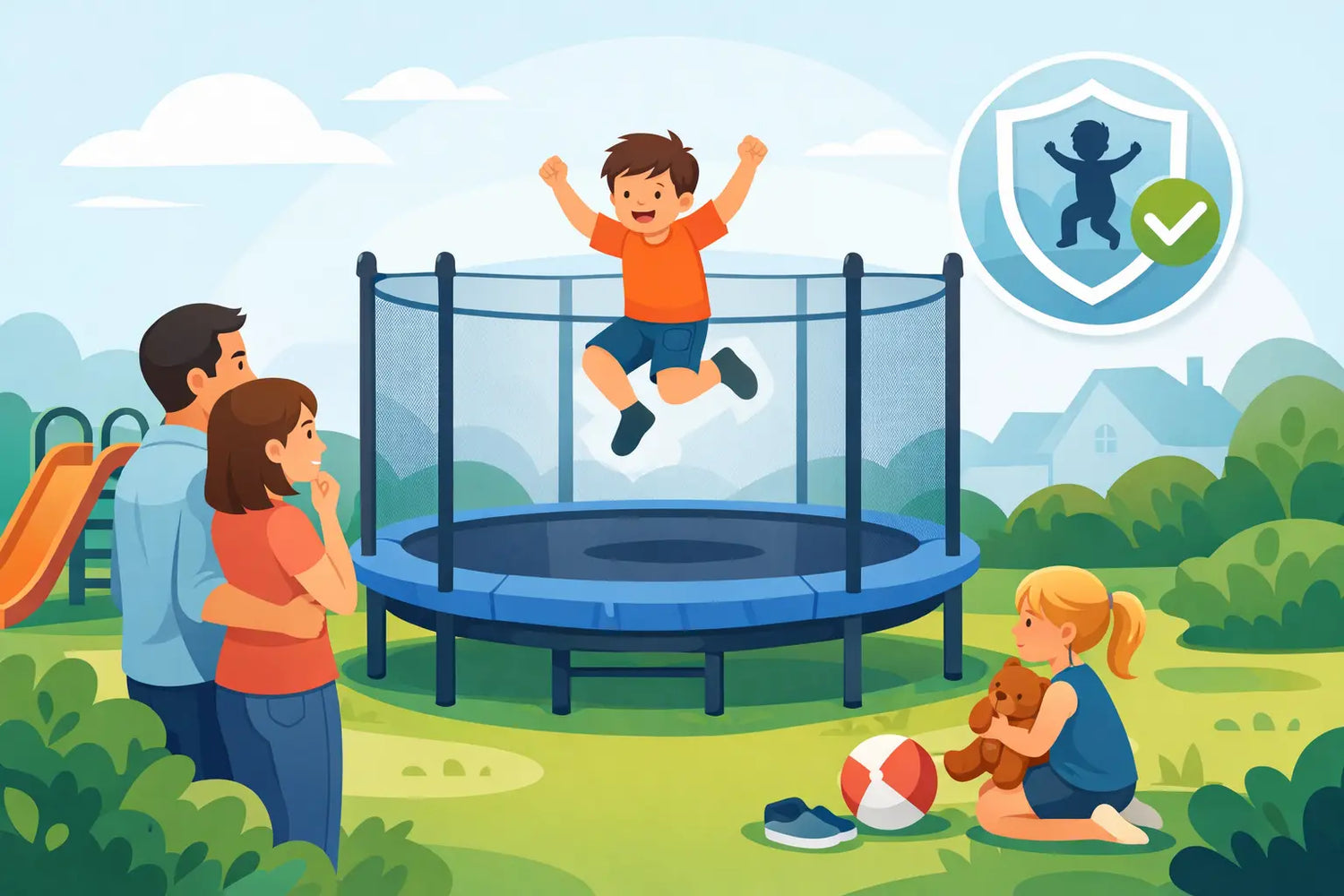
A trampoline can become the center of a child’s backyard routine: fresh air after school, a place to burn off energy, and a reason to invite friends over. But are trampolines safe for kids? The honest answer is that they can be, when families choose quality equipment, set firm rules, and supervise use consistently. A trampoline is not a set-it-and-forget-it purchase. Its safety depends on the product, the installation, the yard, and the habits built around it.
For families investing in a premium backyard, the goal is not to eliminate every possible risk. It is to make smart decisions that reduce preventable injuries and give children a reliable place to play for years.
Are Trampolines Safe for Kids When Used at Home?
Trampolines carry real injury risk. Most injuries happen when more than one person jumps at a time, when a jumper lands incorrectly, or when someone falls or bounces into the frame. Sprains, fractures, cuts, and head injuries can occur, especially when children attempt flips or high-risk tricks without proper training.
That does not mean every family should avoid a trampoline. It does mean that product quality and household rules matter far more than many parents realize. Low-cost units with weak frames, worn jumping mats, exposed springs, or poorly fitted enclosures can introduce risks that a better-built trampoline is designed to address.
Age also matters. Young children have less coordination, body control, and judgment than older kids. They are more likely to lose their balance or be injured by a larger jumper. If your family has children of different ages, the safest approach is simple: one jumper at a time, with adults setting and enforcing the rule.
The Safety Features Worth Paying For
A premium trampoline is built differently from a seasonal big-box purchase. It should feel stable under use, stand up to changing weather, and protect the areas where injuries most often occur. While no feature replaces active supervision, the right design creates a much safer foundation for play.
A Strong Frame and Secure Anchoring
The frame is the backbone of the trampoline. Look for heavy-duty, weather-resistant steel designed to resist movement and corrosion. In North Carolina, summer storms and changing conditions make proper anchoring especially valuable. A trampoline should be secured according to the manufacturer’s instructions so wind and active jumping do not cause it to shift.
Before each season and after severe weather, inspect the frame connections, legs, anchors, and hardware. A loose bolt or bent leg is a reason to stop using the trampoline until it is repaired.
A Full Safety Enclosure
A properly designed enclosure helps keep jumpers on the mat instead of falling to the ground or onto the frame. The net should be tall, taut, free from tears, and connected securely around the jumping area. The entrance should close fully every time.
An enclosure is not permission for rough play or multiple jumpers. Children can still collide inside the net. Think of it as one layer of protection, not the entire safety plan.
Protected Springs or a Springless Design
Traditional spring trampolines need thick, durable padding that completely covers the springs and frame edge. If the padding is cracked, thin, missing, or shifting out of place, replace it before children jump again.
Some premium designs use springless systems or flexible rods positioned outside the jumping surface. These designs can reduce pinch points and keep the hard components farther from the jumper. They are often a strong choice for families who want an elevated safety design and long-term durability.
A Quality Jumping Mat
The mat should provide predictable bounce and remain firmly attached to the frame. Check for fading, fraying, loose stitching, holes, or worn attachment points. A mat that looks tired may not perform as intended, even if it still appears usable at first glance.
The Rules That Prevent the Most Injuries
The most effective trampoline safety rules are clear enough for a child to remember and consistent enough that no one has to negotiate them every afternoon. Parents should explain the rules before the first jump, not after a close call.
The number-one rule is one jumper at a time. This is especially important when siblings, neighbors, or friends are different sizes. A smaller child can be launched unexpectedly by the bounce of a larger child, even when neither child is trying to play rough.
Children should jump in the center of the mat, avoid flips and somersaults, and never climb or hang on the enclosure net. Shoes, toys, balls, food, and pets should stay off the trampoline. Jumping should stop if the mat is wet, icy, or slick with leaves and debris.
Adult supervision should be active, particularly for younger children. That does not necessarily mean standing beside the trampoline every second for an older, rule-following child, but it does mean knowing who is using it, checking that rules are being followed, and stepping in before play becomes chaotic.
Placement Is Part of Trampoline Safety
A well-made trampoline needs a well-planned location. Place it on level ground with clear space around it and overhead. Avoid low tree branches, fences, decks, patio furniture, power lines, and hard landscape features. The goal is to create a dedicated play zone, not fit a trampoline into the one open corner of the yard.
The surface beneath and around the trampoline matters as well. Grass is common, but it can become uneven or muddy over time. A professionally planned site can account for drainage, slope, access, and the clearance needed for safe use. For some backyards, an in-ground trampoline may be an appealing option because it sits lower and creates a cleaner visual profile. However, it requires proper excavation, drainage planning, and installation. It is not simply an above-ground model placed into a hole.
Keep gates, ladders, or access points controlled when the trampoline is not in use. Limiting unsupervised access is particularly helpful for families with toddlers or younger visiting children.
Maintenance Is a Safety Habit, Not a Chore
Trampolines live outdoors year-round, which means sun, rain, wind, pollen, and frequent use all take a toll. A quick inspection should become part of your family’s routine.
Before children jump, glance at the enclosure, mat, padding, frame, and ground underneath. After storms, check anchors and remove branches or debris. At least a few times a year, inspect every connection more closely and replace worn components with parts made for that trampoline model.
Do not make do with improvised repairs. Duct tape over a torn net, generic padding that does not fit correctly, or mismatched hardware can create a false sense of security. Premium equipment is an investment, and maintaining it with appropriate replacement parts protects that investment.
When a Trampoline May Not Be the Right Choice
A trampoline is not the best fit for every child or every yard. Families with very young children may prefer to wait until their child has better balance and can understand instructions. A crowded, sloped, or obstacle-filled yard may not provide enough clearance. Parents who cannot consistently supervise use or enforce one-jumper rules should be realistic about whether a trampoline will be used safely.
There are also children with medical, developmental, or mobility considerations for whom jumping may not be appropriate. When in doubt, ask your child’s healthcare professional for guidance that reflects their individual needs.
A quality swing set, climbing structure, basketball goal, or other backyard activity may be a better match for some families. The right play equipment is the equipment your child can use confidently and safely, not simply the item with the biggest bounce.
A Safer Backyard Starts Before Delivery
Choosing a trampoline should include more than comparing sizes and colors. Ask about frame construction, enclosure design, warranty coverage, replacement-part availability, site requirements, and professional installation. These details affect how the trampoline performs after the excitement of delivery day has passed.
For North Carolina families, Rainbow Play of NC can help make that decision more practical by pairing premium backyard equipment with local guidance, delivery, and professional installation. A properly selected trampoline, a prepared site, and consistent family rules give children what they really need: a fun place to move, play, and make the backyard their favorite destination.