
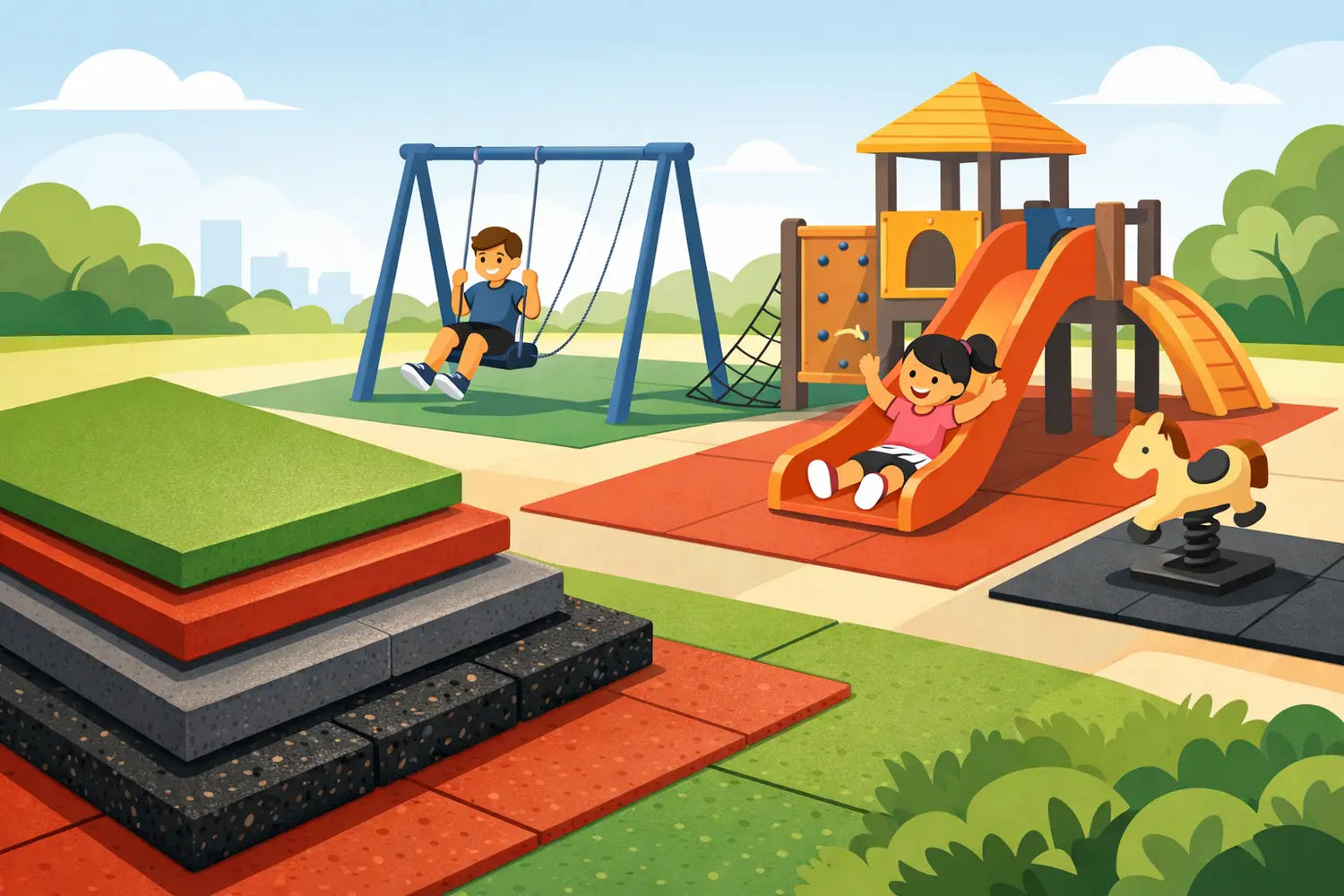
A beautiful playset is only part of a safer backyard. The surface beneath it has a direct job to do when a child loses their grip on a ladder, steps off a swing at the wrong moment, or takes an enthusiastic tumble. The best safety mats for playgrounds are not simply the softest-looking option. They must suit the equipment’s fall height, the size of the play area, the way children use it, and the conditions in your yard.
For North Carolina families, schools, and churches, that also means choosing a surface that handles summer heat, heavy rain, and regular use without becoming a maintenance project. Here is how to choose with confidence.
Start With the Equipment and Its Fall Height
Safety surfacing should be selected after the play system, not before it. Every elevated play component has a potential fall height, generally measured from the highest surface where a child can stand, sit, or climb to the protective surfacing below. A low freestanding toddler climber has different needs than a large wooden playset with a high deck, monkey bars, or a swing beam.
Look for surfacing that has been tested for impact attenuation at the fall height your equipment requires. ASTM F1292 is the commonly referenced standard for measuring a surface’s ability to reduce impact from a fall. This is more meaningful than a general claim that a product is "cushioned" or "shock absorbing." Ask for the product’s tested critical fall height and confirm that it applies to the installation you are considering.
The use zone matters just as much. Protective surfacing should extend beyond the footprint of the structure. Swings, slides, climbers, and overhead equipment create different movement patterns, and swing areas in particular need generous coverage in front of and behind the swing path. A small square mat centered below a swing may protect the patch of grass that wears out first, but it may not provide adequate protection where a child actually lands.
The Best Safety Mats for Playgrounds: Main Options
There is no single best material for every backyard or commercial site. The right choice depends on whether you value a finished appearance, easy wheelchair access, lower upfront cost, simpler repair, or the deepest possible cushioning for a specific setup.
Interlocking rubber playground tiles
Rubber tiles are one of the strongest choices for families who want a tidy, finished play area with consistent coverage. Quality tiles are installed over a prepared, level base and lock together to form a durable surface. They are available in different thicknesses, allowing the system to be matched to the required fall height.
Their main advantages are predictable footing, a clean edge around the play zone, and less ongoing maintenance than loose-fill materials. They also do not scatter into grass, mulch beds, or the house. For a premium backyard playset, tiles can create a polished outdoor-living look that feels intentional rather than temporary.
The trade-off is cost and preparation. A good tile installation depends on proper grading, drainage, and a stable base. If the ground shifts or water is allowed to collect beneath the tiles, seams and edges can become problems over time. Professional installation is especially worthwhile on larger areas or sites with slopes.
Poured-in-place rubber surfacing
Poured rubber creates a smooth, continuous surface and is often used in schools, childcare centers, and community playgrounds. It can be designed in colors or patterns, offers excellent accessibility when installed correctly, and eliminates seams that may catch toes or wheels.
This option is particularly attractive for sites that serve children and caregivers using mobility devices. When accessibility is a priority, ask about ASTM F1951 testing, which addresses wheelchair access across playground surfaces. A smooth surface may look accessible, but tested performance and proper installation are what matter.
Poured-in-place surfacing is a premium investment. It requires professional installation and careful base preparation, and it should be evaluated for drainage before work begins. It is an excellent long-term solution for high-use spaces, but it may be more than a typical small backyard requires.
Loose-fill rubber mulch
Rubber mulch offers a softer, more natural-looking playground area than hardscape and is often easier to expand as a play space grows. When installed at the correct depth and contained by suitable borders, it can provide effective fall protection while allowing water to drain through.
It does need attention. Children kick it out of high-traffic areas, and swings can create worn landing zones that require periodic raking and topping off. It can also retain heat in direct summer sun. For many larger backyards, the balance of cushioning, drainage, and cost makes rubber mulch a practical option, provided the depth is maintained throughout the use zone.
Portable or standalone rubber mats
Standalone mats have a useful place, but they are often misunderstood. They can protect turf beneath swings, at slide exits, near climbing access points, or in other concentrated wear areas. They are also convenient for smaller pieces of equipment where the manufacturer specifically permits their use.
They should not automatically be treated as a complete playground surfacing system. If a mat is too thin, too small, or not rated for the equipment’s fall height, it can leave children unprotected outside its edges. Use them as part of a larger plan, not as a quick substitute for properly designed surfacing under an elevated playset.
Do Not Skip Base Prep and Drainage
Even the highest-quality safety mat can underperform on a poorly prepared site. The ground should be graded so water moves away from the play area rather than pooling beneath it. A stable, compacted base helps keep tiles level and prevents uneven spots from developing after seasonal rain and soil movement.
This is especially relevant across Raleigh, Durham, Cary, and the surrounding areas, where clay-heavy soil and intense storms can expose drainage issues quickly. A site assessment can identify whether a small grade adjustment, border system, or drainage layer will protect your investment before surfacing is installed.
Avoid placing safety mats directly over uneven turf, roots, or loose soil and expecting them to remain flat. Edges can lift, connections can separate, and the surface may become a trip concern. The goal is not only a softer landing. It is a stable, level play zone that continues to perform through changing seasons.
Choose for Real Use, Not Just First Impressions
The most attractive surface sample in a showroom is not always the best fit for your family. Consider how your children will use the space over the next several years. A toddler-only area may have modest fall-height requirements today, but a playset with a taller deck or overhead activities changes the decision. If you expect frequent neighborhood playdates, durability and easy cleanup can carry more weight than initial price.
For schools, churches, and community spaces, traffic volume raises the stakes. Look for commercial-grade materials, documented testing, accessible routes where needed, and an installation plan that accounts for supervision areas, entrances, and transitions between surfaces. A surface that is easy to maintain is also easier to keep safe day after day.
Color deserves a practical conversation, too. Dark rubber can become hot in full sun. Lighter colors may help reduce surface temperature, although no material should be assumed cool on a sunny North Carolina afternoon. Check the surface by hand before play, provide shade when possible, and encourage shoes during hot weather.
Questions to Ask Before You Buy
Before selecting a playground mat or surfacing system, confirm the answers to these essentials:
- What fall height is the surface tested to protect?
- How far must the protective surfacing extend around this specific equipment?
- Does the selected thickness apply to the installed base and product configuration?
- How will water drain away from and beneath the play area?
- Is the material appropriate for the expected traffic, climate, and maintenance routine?
- If accessibility is needed, does the finished system meet the relevant accessibility performance requirements?
A well-planned surface gives children room to climb, swing, and test their confidence while giving parents a better measure of peace of mind. Rainbow Play of NC can help match premium play equipment with a surfacing solution sized for your yard, your family, and the way your children actually play.