
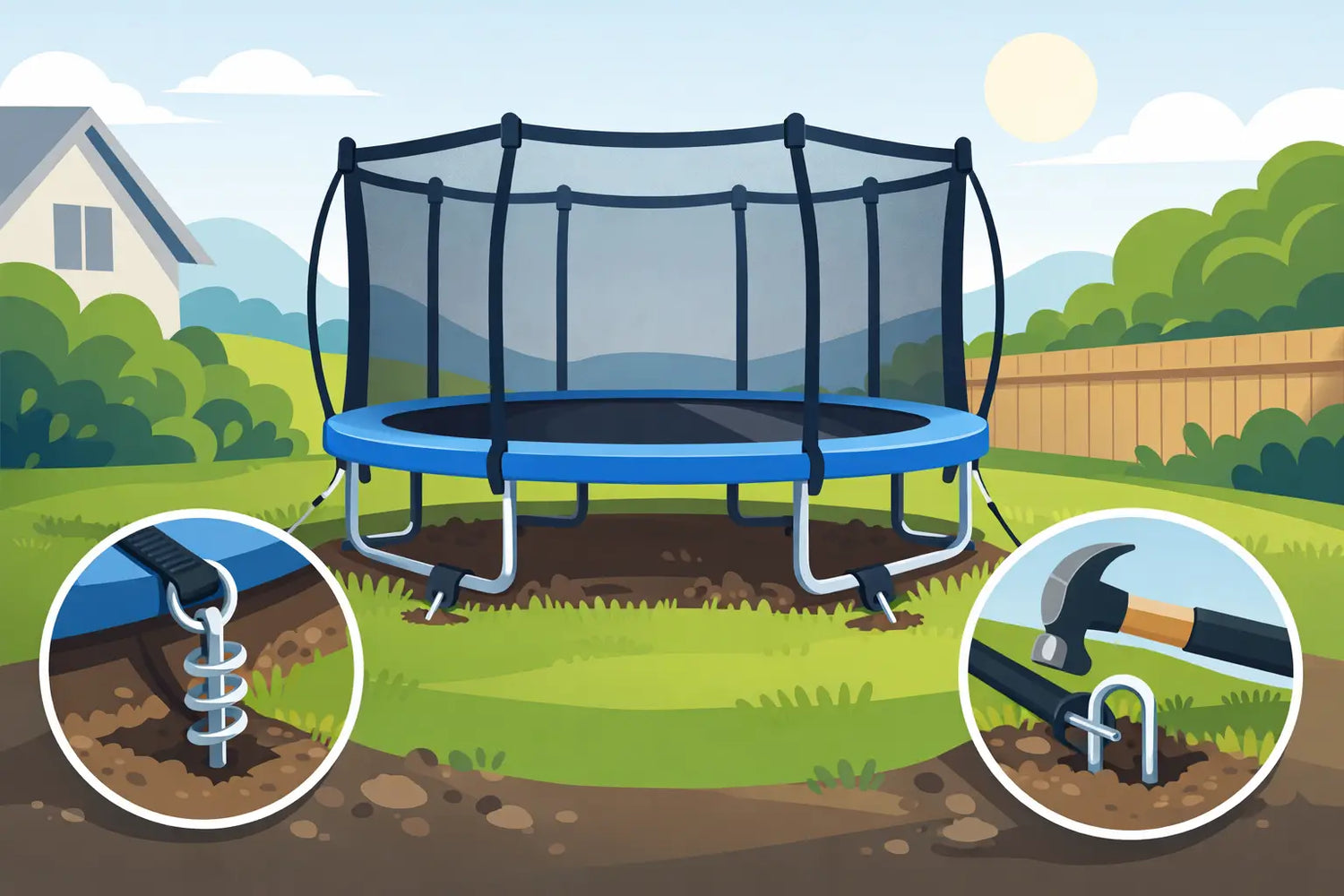
A trampoline can look perfectly secure on a calm afternoon, then become a serious concern when a fast-moving North Carolina thunderstorm rolls in. If you are asking how to anchor trampoline safely, the goal is not simply to keep it from shifting. It is to secure the frame in a way that protects jumpers, avoids damage to the trampoline, and fits the conditions of your specific backyard.
Anchors are a smart safety measure for most above-ground trampolines, particularly in open yards or neighborhoods where wind can sweep across few obstacles. They are not a substitute for supervision, a properly installed safety enclosure, or following your trampoline manufacturer’s instructions. Think of them as one essential part of a well-planned backyard play space.
Start With the Right Location
The safest anchor system cannot make up for poor trampoline placement. Before installing anchors, make sure the trampoline sits on level ground with adequate clear space around it. The frame should be stable, all legs should touch the ground evenly, and there should be no low branches, fences, retaining walls, play equipment, or hard surfaces within the recommended safety zone.
Avoid placing a trampoline in a low spot that regularly collects water. Saturated soil can loosen ground anchors, especially after several days of rain. A location that looks flat but slopes gradually may also create uneven force on the frame and make the trampoline less stable during use.
For families in Raleigh, Cary, Durham, and throughout Eastern North Carolina, soil conditions can vary significantly from one yard to the next. Dense clay, loose sandy soil, newly graded lots, and landscaped areas all hold anchors differently. Check the ground where each anchor will go rather than assuming every section of the yard is the same.
Choose an Anchor Kit Designed for Your Trampoline
Use an anchor kit that is compatible with your trampoline’s frame size and design. Many quality kits include heavy-duty steel augers, straps or tie-downs, and hardware intended to connect to the frame. The trampoline manufacturer’s recommended kit is usually the best starting point because it is designed for that model’s leg configuration and load points.
The two most common residential options are spiral ground anchors and U-shaped anchors. Spiral anchors screw into the soil and are generally the stronger choice for long-term wind resistance when installed correctly. U-shaped anchors fit over the frame legs and into the ground, helping limit movement, but they may not provide the same holding power in loose or wet soil.
Strap-style tie-down systems use ground anchors plus straps that fasten to the trampoline frame. They can add security, but the straps must attach at approved frame locations. Never run straps across the jumping mat, over the safety net, or through the enclosure opening. Doing so can create an entanglement hazard, interfere with normal movement, or damage the trampoline components.
Be cautious with generic hardware-store solutions. Rope, bungee cords, tent stakes, or improvised chains are not suitable replacements for a purpose-built trampoline anchor kit. They can stretch, snap, rust, or place pressure on parts of the frame that were not designed to carry that load.
How to Anchor a Trampoline Safely, Step by Step
Read the trampoline and anchor-kit instructions before you begin. Anchor placement, strap routing, and the recommended number of anchors differ by manufacturer. If the instructions conflict with general advice, follow the manufacturer’s requirements for your specific trampoline.
Begin by assembling and positioning the trampoline completely. Do not try to anchor a partially assembled frame. Once the unit is level and all frame connections are properly secured, mark the anchor locations around the base. A typical round trampoline may use four anchors spaced evenly around the frame, while larger rectangular models may require more.
Install each spiral anchor at a slight outward angle away from the trampoline, unless the kit instructions specify otherwise. The outward angle helps the anchor resist pulling forces. Screw it deeply into the ground until the top eye or attachment point is close to the surface, with no sharp metal extending where children could trip or make contact.
Connect the straps or frame attachments to the designated points. Keep them taut enough to limit lifting and side-to-side movement, but do not overtighten them. Excess tension can distort the frame or stress the legs. After connecting every anchor, walk around the trampoline and check that the frame remains level and that no strap rubs against the mat, springs, spring padding, or enclosure net.
Finally, test the setup from outside the trampoline. Gently push the frame in several directions. A properly anchored trampoline should feel planted, though it may still have a small amount of normal movement. If an anchor shifts, spins freely, or pulls upward, stop and reassess the soil, anchor depth, and kit selection.
Match the Anchor System to Your Soil and Weather
Anchoring needs are not identical in every backyard. In firm, compacted soil, spiral anchors may install securely and remain stable for long periods. In loose sand or recently disturbed soil, they can pull out more easily. You may need longer anchors, a manufacturer-approved alternate system, or professional guidance before relying on the setup.
Hard clay presents a different challenge. It can hold anchors well once installed, but forcing an auger into dry, compacted clay may bend the anchor or damage its threads. Lightly moistening the ground can make installation easier, but do not install anchors in muddy soil that cannot support a solid hold.
Wind is the reason most homeowners anchor a trampoline, but no anchor kit makes an above-ground trampoline invincible in severe weather. Before a hurricane, tropical storm, or forecast with damaging wind gusts, follow the trampoline manufacturer’s storm-preparation guidance. Depending on the model and expected conditions, that may mean adding approved tie-downs, removing accessories that catch wind, or disassembling and storing the trampoline.
Do not assume an enclosure net will protect the trampoline in high wind. Nets can act like sails, and leaving a trampoline fully assembled during extreme weather can still lead to frame damage or anchor failure. Your local forecast matters more than a one-time installation.
Keep Anchors From Becoming a New Hazard
An anchor system should strengthen the trampoline without creating trip points around it. Position anchors outside the normal entry and exit path, keep straps close to the frame, and avoid leaving exposed metal above ground level. Follow the kit instructions for protective caps if they are included.
After installation, make anchoring part of your regular trampoline inspection. Check the anchors after major storms, heavy rain, extended freezing weather, and lawn work near the trampoline. Look for loose straps, corrosion, bent metal, lifted soil, worn webbing, and legs that no longer sit evenly on the ground.
This is also a good time to inspect the rest of the trampoline: spring padding, enclosure poles, netting, frame connections, and the jumping surface. A secure frame is only one part of a safe jumping experience. Establish household rules that allow one jumper at a time, prohibit flips without qualified instruction, and keep shoes, toys, and pets off the trampoline.
When Professional Setup Is Worth It
Professional installation can be especially valuable for large premium trampolines, uneven yards, difficult soil, or families who want the confidence of a properly planned setup from day one. It also helps when a backyard includes other equipment and you need to preserve clear safety zones between a playset, basketball goal, patio, and trampoline.
Rainbow Play of NC can help families evaluate trampoline placement, product options, and installation needs before equipment arrives in the yard. For a significant backyard investment, knowledgeable setup protects both the product and the people who will enjoy it.
A well-anchored trampoline should fade into the background of family life. When the frame is level, the anchors are secure, and seasonal checks become routine, kids can focus on the best part: getting outside, burning energy, and making the backyard their favorite place to play.