
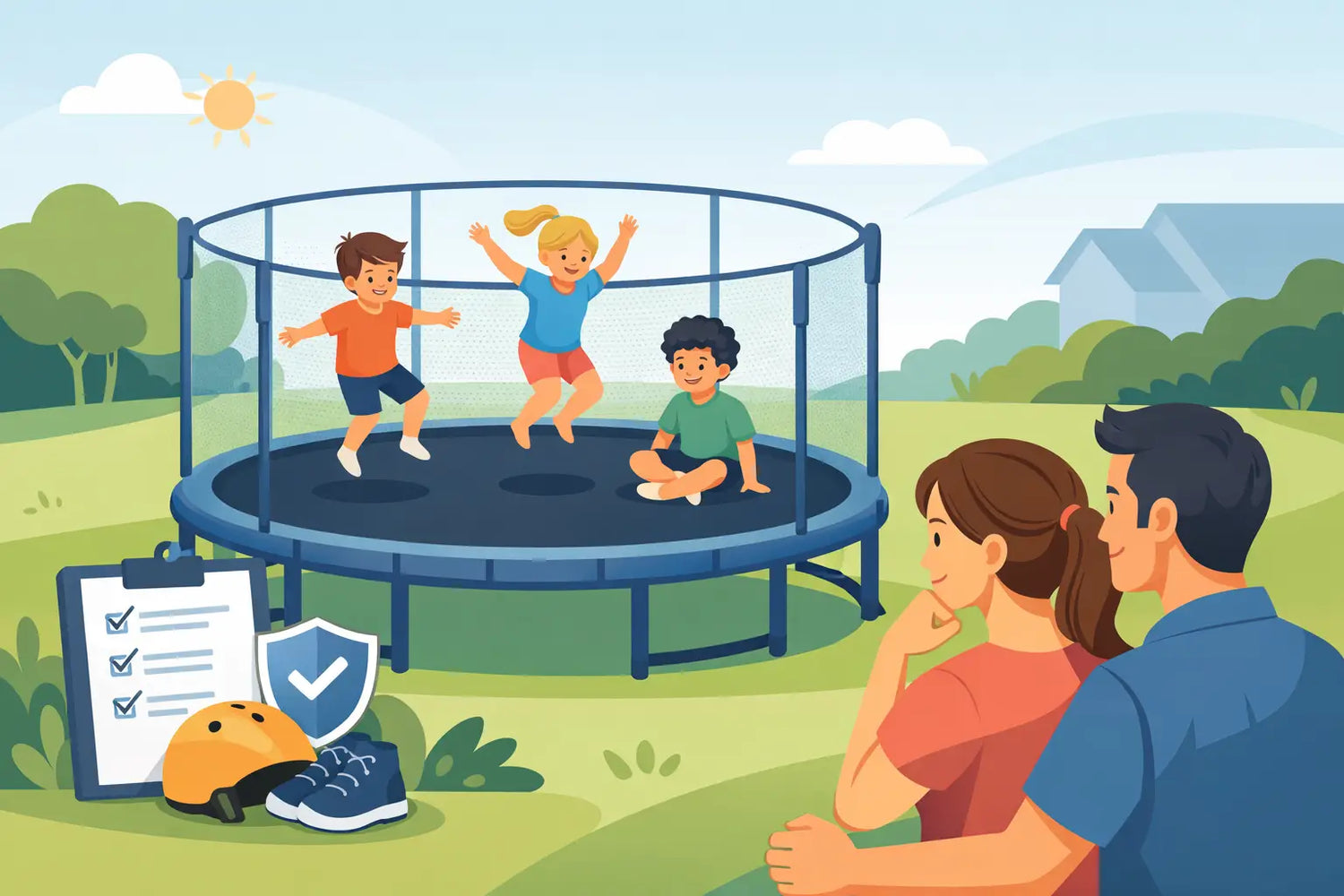
One quick bounce can turn into a hard lesson if a trampoline is placed poorly, overloaded, or used without clear rules. That is why a trampoline safety guide for parents should start before the first jump, not after the first close call. The safest trampoline experience comes from smart product selection, professional installation, active supervision, and a backyard setup designed for real family use.
Why a trampoline safety guide for parents starts with the right setup
Most trampoline injuries are not caused by a single dramatic failure. They happen when several small risks stack up - a missing spring pad, a torn net, two kids jumping at once, or a frame placed too close to a fence. Parents often focus on the fun factor first, but safety starts with location, construction quality, and how the trampoline is introduced to the family.
A premium trampoline usually earns its value in the areas that matter most over time: frame strength, padding quality, enclosure design, weather resistance, and long-term durability. For North Carolina families, that matters even more. Heat, humidity, rain, and seasonal storms can wear down lower-grade materials faster than many buyers expect. What looks fine in the showroom or in an online photo may not hold up after repeated exposure and heavy use.
Placement matters just as much as product quality. A trampoline should sit on level ground with generous clearance on every side and above it. Trees, patio edges, fencing, play sets, and hard landscaping all reduce the margin for error. If your yard is sloped or has drainage issues, that is not a detail to work around casually. It is a reason to get expert guidance before installation.
Choose a trampoline built for safety, not just price
Parents shopping for trampolines are often balancing excitement, budget, and long-term value. That is normal. But with trampolines, the cheapest option can become the most expensive if it wears out quickly, needs frequent replacement parts, or creates preventable safety concerns.
Look closely at the frame, enclosure system, spring protection, and weight ratings. A strong galvanized steel frame helps resist corrosion and structural fatigue. Thick, secure padding over springs and frame edges reduces impact risk. An enclosure should be integrated in a way that keeps jumpers away from the springs and poles, not just loosely attached as an afterthought.
Weight capacity deserves careful attention too. Some brands advertise a high static weight limit, but that is not the same as real jumping performance. Parents should think about the size and ages of the children using the trampoline, how often it will be used, and whether the model is designed for long-term backyard use rather than occasional light play.
This is one area where showroom support and professional consultation can make a real difference. A family with one preschooler has different needs than a household with three active grade-school kids, or a church or school planning for more frequent use. The best trampoline is not just the one that fits the yard. It is the one that fits how your family will actually use it.
Professional installation adds a real layer of protection
A trampoline may look straightforward to assemble, but proper installation is one of the easiest ways to reduce avoidable risk. Uneven frame tension, loosely secured enclosure poles, incorrect anchor placement, and missed hardware checks can all affect performance and safety.
Professional installation helps ensure the frame is level, components are secured correctly, and the unit is positioned with proper clearance. It also saves parents from the trial-and-error approach that often comes with self-assembly. For a premium backyard purchase, convenience matters, but so does confidence. Knowing the trampoline was installed correctly gives families a stronger starting point.
In areas where weather can shift quickly, anchoring matters as well. High winds can move or damage an unsecured trampoline, even when it is not in use. An installation team can help assess whether your yard needs additional stabilization based on surface conditions and exposure.
The safety rules that matter most
The best trampoline rules are simple enough for kids to remember and firm enough for parents to enforce every time. Consistency matters more than having a long list posted on the fence.
The first rule is one jumper at a time. This is the rule many families resist because it feels restrictive, especially when siblings want to play together. But multiple jumpers create one of the most common injury scenarios. The mat transfers force unpredictably, and a smaller child can be launched or knocked off balance by a heavier jumper without warning.
The second rule is no flips, somersaults, or advanced tricks unless the setting is specifically designed for trained use and proper coaching. Backyard trampolines are not gymnastics facilities. Neck and head injuries are rare compared with sprains and fractures, but when they happen, the consequences can be severe.
The third rule is active supervision. That does not mean watching from inside the kitchen while loading the dishwasher. It means an adult is present, attentive, and ready to stop unsafe behavior immediately. Supervision is especially important when younger children are involved, when guests are visiting, or when excitement levels are high.
Shoes, sharp objects, roughhousing, climbing on the enclosure, and jumping during wet or windy conditions should all be off-limits. Wet mats can become slick fast, and a safety net is not a climbing feature.
A trampoline safety guide for parents must include age and size judgment
Not every child is ready for a trampoline at the same age. Parents know their children best, but readiness is about more than enthusiasm. Balance, body control, ability to follow directions, and impulse control all matter.
Younger children are often at greater risk because they are less coordinated and more vulnerable to injury from shared jumping. If a family has children of different ages, separate trampoline time is usually the safer choice. A size gap between jumpers can create dangerous force differences, even when everyone is trying to play nicely.
Parents should also consider how visitors will use the trampoline. A child who understands your house rules may be much safer than a guest who has never used one before. Before anyone climbs on, take a minute to explain the rules clearly. That brief reset prevents a lot of backyard problems.
Maintenance is part of safety, not an afterthought
A trampoline is not a set-it-and-forget-it purchase. Regular inspection is part of responsible ownership, especially in a region with changing weather and strong sun exposure.
Check the frame for rust, movement, or bent sections. Look at the mat for fraying, thinning, or small tears near attachment points. Inspect the enclosure net for holes, loose stitching, or sagging. Padding should stay in place and continue to cover the springs and frame fully. If any part is worn or damaged, pause use until it is repaired or replaced.
It is also smart to review the area around the trampoline. Grass can wear down, ground can shift, and nearby objects can creep closer over time as your backyard evolves. Seasonal checks are a good habit, especially after storms or high winds.
Quality products tend to make maintenance easier because replacement parts, warranty support, and better materials help extend the life of the system. That is another reason premium equipment often delivers better long-term value than an entry-level model that deteriorates quickly.
Safer backyard play is about the whole environment
A trampoline should fit into a backyard plan, not sit in the middle of one without thought. Think about visibility from the house, drainage, traffic flow, and how close it is to other play features. If children are running between a swing set, basketball goal, and trampoline, spacing matters.
This is where expert local guidance can help families make better decisions. Rainbow Play of NC works with families who want their outdoor spaces to be fun, polished, and built to last. A trampoline should feel like a confident investment in active play, not a backyard compromise you worry about every weekend.
The goal is not to remove every scrape or minor mishap from childhood. Active outdoor play will always come with some risk. The goal is to make smart choices that reduce preventable injuries while keeping the experience fun, durable, and manageable for real families.
A well-made trampoline, installed correctly and used with clear rules, gives kids a great reason to head outside and gives parents more peace of mind while they do it. That is a backyard upgrade worth getting right from day one.