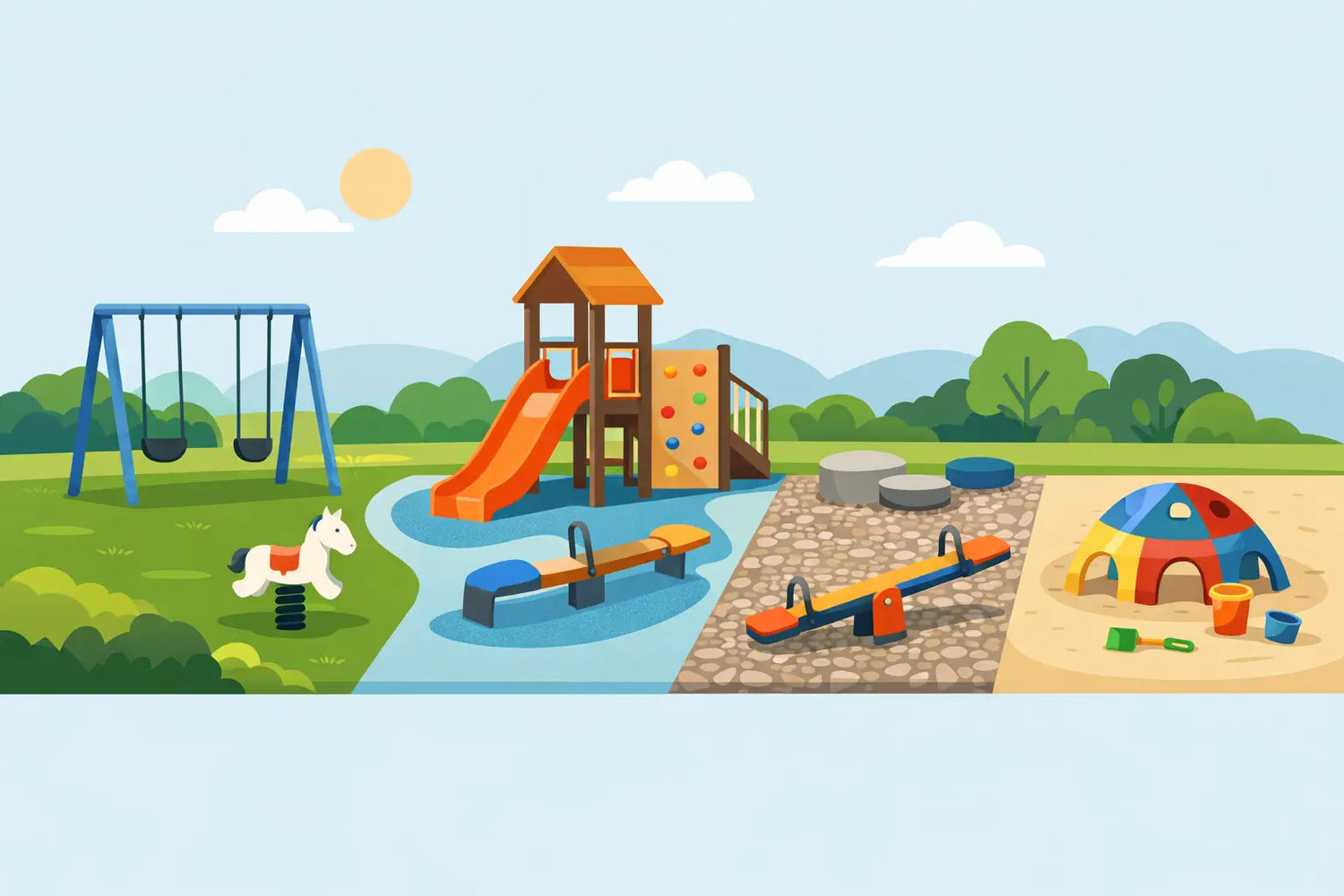
A beautiful playset can be the centerpiece of a backyard or community play space, but the best playground safety surfacing is what helps that space perform the way it should when kids start climbing, jumping, and running hard. Parents often focus on the swing beam, slide height, or overall footprint first. The smarter long-term decision is to think just as carefully about what goes under the equipment.
Surfacing affects more than appearance. It plays a direct role in fall protection, maintenance, drainage, cleanliness, accessibility, and how much work the space will require a year from now. That is why the right answer is not always the cheapest material up front. It is the surface that fits your play system, your space, your budget, and the way your family or organization will actually use it.
What makes the best playground safety surfacing?
The short answer is impact attenuation, which is a practical way of saying the material helps reduce injury risk from falls. But safety surfacing also needs to hold up through weather, stay in place, and make sense for the users. A backyard with toddlers has different needs than a church playground with constant weekly traffic. A school or childcare center may also need to think carefully about accessibility, code requirements, and daily supervision.
That is where many buyers get tripped up. They compare materials only by price per square foot and miss the bigger picture. The best value usually comes from balancing fall protection, longevity, maintenance, drainage, and installation quality.
Best playground safety surfacing for different spaces
There is no single perfect material for every play area. Each option comes with strengths and trade-offs.
Rubber mulch
Rubber mulch is a popular premium choice for homeowners who want a cleaner, lower-maintenance alternative to wood products. It provides strong shock absorption, does not decompose like organic loose-fill materials, and usually keeps its appearance longer. It also tends to stay more consistent over time, which matters in active play zones under swings and at slide exits.
For many backyard families, rubber mulch lands in a practical middle ground. It offers a softer landing surface with less frequent replacement than wood mulch, while still working well around larger wooden play systems. It is also appealing for customers who want a finished, high-end look that complements an investment-grade swing set.
The trade-off is cost. Rubber mulch generally costs more up front than engineered wood fiber. It can also migrate outside the play area without proper borders, and like any loose-fill material, it may need occasional raking or redistribution.
Engineered wood fiber
Engineered wood fiber is one of the most common choices for schools, churches, parks, and budget-conscious backyard projects. It is not the same as regular landscaping mulch. It is specifically processed for playground use and, when installed at the proper depth, can provide solid impact protection.
This option often works well for larger installations because the initial investment can be more manageable. It has a natural look that blends easily into many outdoor settings, and it is widely recognized in commercial play applications.
Its biggest drawback is maintenance. Wood fiber compacts over time, shifts in heavy-use zones, and breaks down gradually with weather and use. That means topping off, leveling, and routine inspection are part of the package. In North Carolina, where rain and seasonal moisture matter, drainage and base preparation become especially important.
Poured-in-place rubber
If the goal is a polished, highly accessible, low-migration surface, poured-in-place rubber is often one of the strongest options available. It creates a continuous surface that is attractive, stable underfoot, and well suited for commercial spaces that want ADA-friendly access. Schools, churches, HOAs, and public-facing playgrounds often look at this option because it delivers a finished, professional appearance.
It also solves some of the headaches that come with loose-fill materials. You do not need to rake it back into place, and wheelchairs, strollers, and mobility devices can move across it much more easily.
The trade-off is that it is usually one of the higher-cost options up front, and installation quality matters a great deal. A poor install can shorten lifespan or create performance issues. Repairs, while possible, are not always as simple as adding more loose material.
Rubber tiles
Rubber tiles can be a smart solution in certain play spaces, especially where a more uniform look and easier section-by-section replacement are priorities. They provide good cushioning and can work well in specific commercial or structured environments.
That said, they depend heavily on proper sub-base preparation and skilled installation. Over time, edges and seams can become a concern if the surface is not installed and maintained correctly. For some buyers, they are a better fit for targeted areas than for an entire large-scale playground.
Artificial turf with padding
Artificial turf systems designed for playground use can deliver a clean, upscale appearance that many homeowners and organizations like. When paired with an appropriate pad system, they can offer fall protection while creating a finished landscape look.
This option is especially appealing for families who want a backyard that feels less like a traditional mulch zone and more like an integrated outdoor living space. It can also reduce visible mess and tracking compared with loose-fill materials.
The details matter here. Not every turf product is playground-rated, and not every padded turf system performs the same way. Drainage, infill, heat retention, and long-term wear all need to be considered before calling this the best playground safety surfacing for your space.
How to choose the best playground safety surfacing for your yard or facility
Start with fall height. The height of the deck, swings, climbers, and slides helps determine what level of impact protection you need. This is not a guess-and-check category. The play equipment and the surfacing should work together as a system.
Next, think about use patterns. A backyard used by two children on weekends will wear differently than a church playground used by dozens of kids every Sunday and during weekday programs. Heavy traffic changes the conversation fast. Loose-fill materials may need more ongoing attention in busy spaces, while unitary surfaces can justify their cost through reduced maintenance and cleaner day-to-day use.
Then consider cleanup and maintenance honestly. Some families do not mind occasional raking and seasonal refreshing. Others want something that looks good with less hands-on upkeep. Institutional buyers may need a surface that staff can monitor easily without constant replenishment.
Drainage should also be part of the decision from day one. A premium surfacing material installed over a poor base can still create problems. Standing water, washout, compaction, and uneven wear usually point back to preparation and installation, not just the material itself.
Why installation matters as much as the material
Even the best playground safety surfacing can underperform if the site is not prepared properly. Borders, grading, depth, compaction, and drainage all influence how the surface holds up. That is one reason many homeowners and facilities prefer working with an expert who can evaluate the entire play area rather than simply deliver product.
For premium backyard playsets, professional installation protects the investment from the start. It helps ensure the surfacing depth matches the equipment, the landing zones are covered correctly, and the finished area looks intentional rather than pieced together. For schools and churches, that same expertise supports safer outcomes and fewer maintenance surprises.
At Rainbow Play of NC, that full-picture approach matters because families and organizations are not just buying a product. They are creating a play space that needs to be safe, durable, and ready for years of use.
Common mistakes buyers make
One of the most common mistakes is using standard landscape mulch and assuming it is close enough. It is not designed for playground fall protection the way engineered playground products are.
Another is underestimating the size of the use zone. The surface needs to extend beyond the equipment itself, especially around swings and slide exits where movement and impact are concentrated. Choosing too small an area can create both safety and maintenance problems.
Some buyers also focus only on initial price. That can make a lower-cost material look better on paper, even if it needs more frequent replenishment, more cleanup, or more labor over time. The better question is what the total ownership experience will look like after one, three, or five years.
Which option is best?
For many premium backyard playsets, rubber mulch is a strong all-around choice because it combines impact protection, durability, and a cleaner finished appearance. For budget-sensitive projects or larger spaces, engineered wood fiber can still be a solid fit when installed and maintained properly. For facilities where accessibility, appearance, and ease of movement matter most, poured-in-place rubber or a quality turf system may be worth the higher initial investment.
The best playground safety surfacing is the one that fits the equipment, the users, and the expected level of upkeep without cutting corners on safety. If you start there, the rest of the decision becomes much clearer.
A play area should feel inviting the minute kids run toward it. The right surface helps make that possible, quietly doing one of the most important jobs in the entire space every single day.