
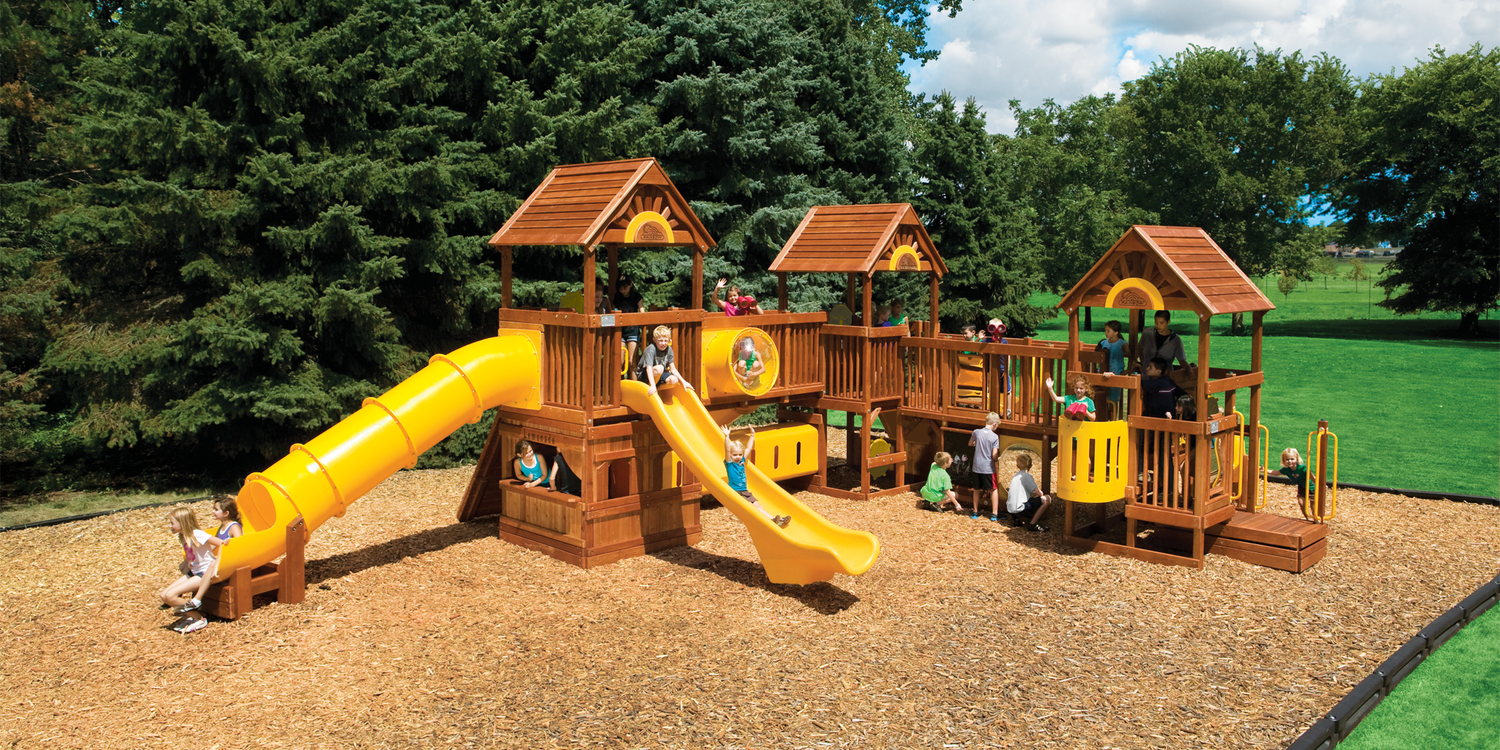
A small swing set works for a season. Then kids grow, friend groups get bigger, and the backyard or play space starts feeling too limited. That is where rainbow play village systems stand out. They are built for families and organizations that want more than a basic playset - more room, more activity options, and more long-term value from one investment.
For homeowners, a village system can turn a backyard into the place where kids want to spend their afternoons. For schools, churches, and childcare centers, it can create a play environment that serves multiple age groups and keeps traffic moving instead of bunching up around one ladder or slide. The appeal is simple: when you need capacity, durability, and a stronger play experience, a larger system makes sense.
What makes rainbow play village systems different?
The biggest difference is scale. A village system connects multiple play zones into one larger structure, which gives children more ways to move, climb, slide, imagine, and interact. Instead of one deck with a few accessories, you get a more complete layout that supports active play from several directions.
That extra size is not only about excitement. It also changes how the space functions. Kids can spread out naturally, which matters in busy backyards, school playgrounds, church recreation areas, and community settings. More access points usually mean fewer bottlenecks and less waiting for a turn, especially when several children are playing at once.
Premium construction matters here too. Larger systems need to hold up to heavier use, changing weather, and years of climbing, swinging, and sliding. High-quality wood, strong hardware, thoughtful engineering, and professional installation all work together to protect the investment. A larger play system should feel solid on day one and still feel solid years later.
Who should consider rainbow play village systems?
Village systems are not only for commercial spaces. They are often a strong fit for larger family properties where parents want a backyard feature that keeps pace with growing kids. If your children regularly have friends over, or if you have multiple children with different ages and activity levels, a larger system can make everyday play much easier.
They are also a practical choice for institutions. Schools need equipment that can support recess traffic. Churches often want a welcoming outdoor feature for families. Childcare centers need dependable play structures that encourage movement and imagination while standing up to frequent daily use. In these settings, buying too small usually becomes obvious very quickly.
That said, bigger is not automatically better for every property. If yard space is limited, if local setbacks reduce installation options, or if the age range is very narrow, a more compact premium playset might be the smarter choice. The right system should fit the users, the property, and the long-term plan.
How to choose the right village system
A good buying decision starts with the space itself. Before looking at towers, bridges, and slide combinations, it helps to understand how much usable area you really have. That includes the footprint of the structure, the safety area around it, nearby fences or trees, and access for delivery and installation.
The next question is who will use it most. A family with younger children may want easier access points, lower deck heights, and features that support imaginative play. A school or church may need a layout that keeps older and younger kids engaged at the same time. Capacity matters just as much as features. A system that looks impressive but feels crowded during actual use will not deliver the experience you want.
Budget should be part of the conversation early, not at the end. With larger play systems, price reflects more than size. It includes materials, design complexity, accessories, installation requirements, and site conditions. Financing can make a premium purchase easier to manage, especially when the goal is to choose a system that lasts rather than replacing a lesser one later.
Safety is more than a feature list
When parents and facility leaders shop for larger play equipment, safety is usually the first concern, and it should be. But safety is not one thing. It is the result of the entire setup working together.
The structure itself matters, of course. So do stable anchors, proper spacing, secure hardware, strong handholds, and age-appropriate design. Just as important is what happens underneath the system. Safety surfacing can make a major difference in reducing injury risk, especially in high-use environments where falls are more likely.
Installation is another piece people sometimes underestimate. Even the best equipment can underperform if it is not assembled correctly or placed on an unsuitable site. Professional installation helps make sure the structure is level, properly secured, and set up to perform the way it was designed to. For a premium play system, that level of expertise is worth it.
Why premium materials matter in North Carolina
Outdoor equipment in North Carolina has to deal with heat, humidity, rain, and long seasons of use. That climate can expose weaknesses quickly. Lower-grade materials may fade faster, loosen sooner, or require more upkeep than expected.
A premium wood play system is designed for the real demands of outdoor living. Better lumber, stronger coatings, and more durable components help the structure maintain both performance and appearance over time. That matters for families who want their backyard to keep looking polished, and it matters just as much for schools and churches that cannot afford frequent repair issues.
There is still maintenance involved. Any outdoor structure benefits from routine inspections, occasional tightening of hardware, and general care. The difference is that a better-built system starts from a stronger baseline. It is built for years of use, not just a few good seasons.
Backyard value goes beyond resale
Most parents are not shopping for a village system because they expect a direct return at resale. They are investing in how their family lives at home. A larger play system can change daily routines in a good way. It gives kids a reason to head outside, burn energy, build confidence, and spend more time away from screens.
For many families, that convenience becomes one of the biggest benefits. You do not have to pack up for a park trip every time your kids need active play. The backyard becomes the easy answer after school, on weekends, and during school breaks. When the equipment is built to last and professionally installed, it becomes a reliable part of the property rather than a temporary phase.
For institutions, the value shows up differently. A well-chosen play village supports enrollment appeal, family experience, and community use. It signals that the organization takes children’s spaces seriously and is willing to invest in quality.
What to expect from the buying process
Because rainbow play village systems are a higher-consideration purchase, the process should feel guided, not rushed. Seeing options in person can help customers compare size, layouts, and features more confidently than photos alone. That is especially useful when deciding between a large residential setup and a more expansive commercial-grade solution.
Expert consultation can also help you avoid common mistakes. People often underestimate the room required around the structure, overestimate what their site can support, or choose based on appearance without thinking through age range and traffic flow. A local team with installation experience can spot those issues early.
For buyers across Raleigh and Eastern North Carolina, working with a company that handles both product selection and installation adds real convenience. Rainbow Play of NC serves families and organizations that want premium equipment, practical guidance, and a complete setup experience rather than a drop-off and a box of parts.
The best village system is the one that still fits years from now
The smartest purchase is usually not the flashiest one. It is the one that fits your space, your users, and your expectations for the next several years. Some buyers need a large backyard centerpiece with room for siblings and neighborhood friends. Others need a durable, higher-capacity system for daily institutional use. Those are different goals, and the right recommendation should reflect that.
A well-built village system should give children room to grow into it, not out of it right away. That is why quality, layout, safety, and installation all deserve the same level of attention as color and accessories. When those pieces come together, the result is more than a playset. It is a play space people will actually use, season after season.
If you are considering a larger outdoor play investment, start by thinking less about having the biggest structure and more about creating the right one for the way your family or organization really plays.