
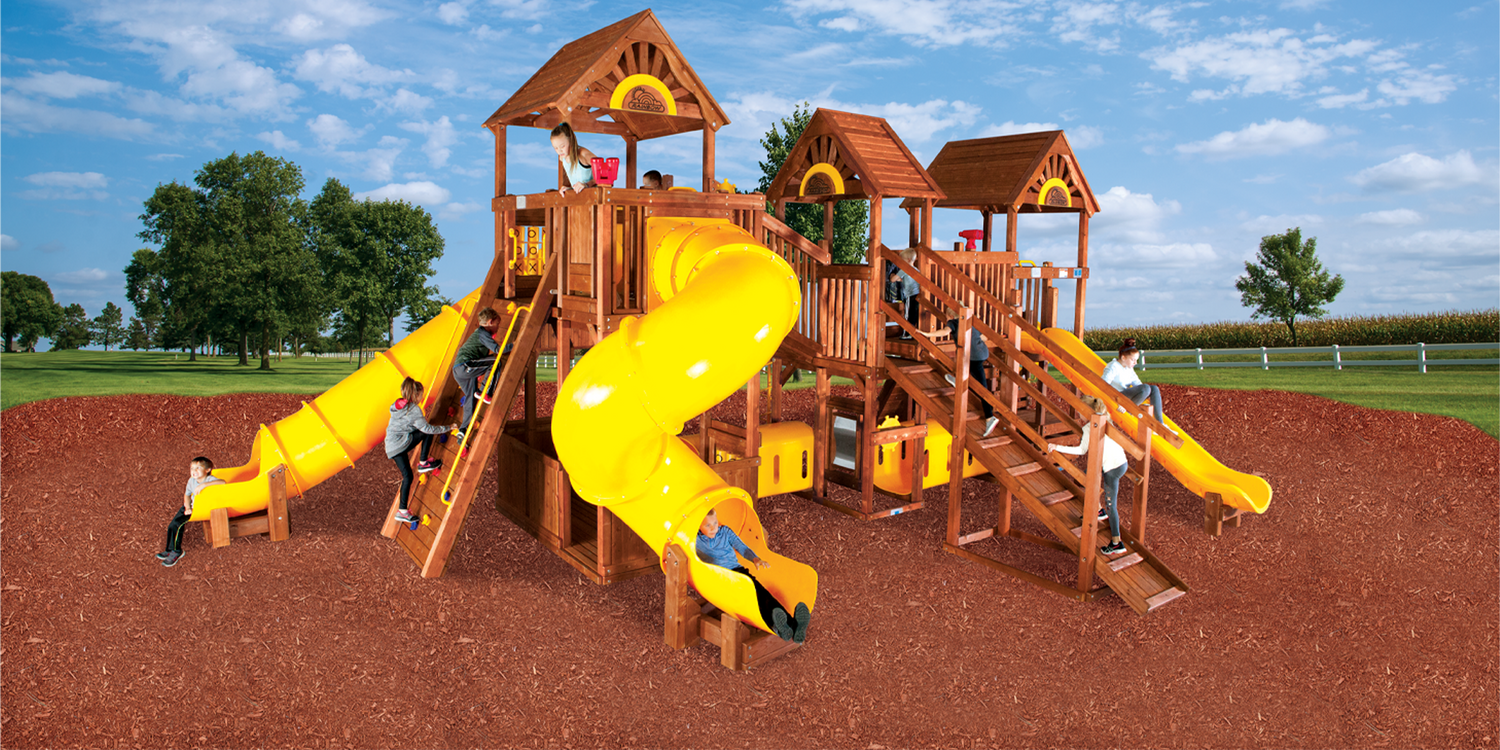
A playground that looks great on day one can become a maintenance problem fast if it is not built for real traffic, real weather, and real supervision needs. That is why commercial playground equipment deserves a different level of planning than a typical backyard set. For schools, churches, HOAs, childcare centers, and community spaces, the goal is not just to fill an outdoor area. It is to create a play environment that stays safe, appealing, and dependable year after year.
When buyers start comparing options, price usually gets attention first. That makes sense. But with commercial play, the better question is what your budget is actually buying - stronger materials, better warranties, smarter layouts, ADA-accessible elements, safer surfacing, and professional installation that helps the whole space perform the way it should.
What sets commercial playground equipment apart
Commercial playground equipment is built for a level of use that residential systems are not designed to handle. In a school or public setting, equipment may see dozens or even hundreds of children in a single day. That kind of demand changes everything from the frame construction to the hardware to the way fall zones are planned.
A true commercial structure is engineered for durability, supervision, and code compliance. Posts, decks, slides, climbers, and connectors are selected with heavy use in mind. Materials need to hold up through heat, humidity, rain, and seasonal shifts without turning into a constant repair project. In North Carolina, that weather resistance matters. Sun exposure, moisture, and regular use can wear down lower-quality products quickly.
The other major difference is scale. Commercial systems are often designed to serve a wider age range, support multiple children at once, and fit a larger circulation plan. That means the layout is not just about the tower and slide combination. It includes access points, sightlines for supervisors, spacing between components, and how surfacing supports safe movement throughout the play area.
Buying for the space you actually have
One of the most common mistakes in a commercial project is choosing equipment before understanding the site. A compact childcare yard needs a different solution than a church campus with room for a large multi-level play structure. The best fit depends on square footage, age groups, traffic volume, and how the space will be used throughout the week.
A preschool-focused area may need lower deck heights, easier climbing access, and sensory-oriented features that build confidence without overwhelming younger children. An elementary school may want more challenge, faster circulation, and components that support social play for larger groups. A neighborhood common area might need a broad age appeal, since toddlers and older children may use the same destination at different times.
This is where expert planning adds real value. The right design is not always the biggest one you can fit. Sometimes a slightly smaller structure with better surfacing, clearer supervision lines, and more age-appropriate activities delivers a better long-term result.
Safety is not a feature - it is the foundation
Families and institutions both care about excitement, but safety is what makes a playground successful over time. Commercial playground equipment should be selected as part of a complete safety system, not as a stand-alone product.
That starts with age-appropriate design. Children need the right level of challenge for their developmental stage. Too little challenge and they lose interest. Too much and the risk of misuse goes up. Good equipment creates engaging movement while guiding children toward safer play patterns.
Surfacing matters just as much as the structure itself. Protective surfacing helps reduce injury risk and affects maintenance, drainage, appearance, and accessibility. Depending on the site, buyers may compare options like rubber mulch, poured-in-place surfacing, or engineered wood fiber. Each has trade-offs. Some surfaces may offer a cleaner appearance or lower maintenance. Others may be more budget-friendly upfront. The best choice depends on your site conditions, your maintenance expectations, and how polished you want the finished play area to feel.
Professional installation is another part of the safety equation. Even premium equipment can underperform if it is installed incorrectly. Anchoring, spacing, leveling, hardware tightening, and surfacing depth all matter. For commercial buyers, experienced installation support is not an extra. It is part of protecting the investment.
Durability affects the real cost
Cheap equipment often looks attractive at the proposal stage. It rarely looks as good after years of sun, moisture, and daily wear. Commercial buyers are usually better served by focusing on long-term value rather than lowest upfront number.
Durability shows up in the details. It is in the coatings that resist fading and corrosion. It is in heavy-duty hardware that stays secure. It is in the slide and deck materials that keep their structure under repeated use. It is also in the warranty support behind the product. A strong warranty does not replace quality, but it does show confidence in how the equipment is built.
For schools, churches, and community organizations, downtime has a cost too. If a play area needs repeated repairs or frequent part replacement, that affects supervision, budgeting, and the user experience. Equipment that holds up better is often the more economical choice across the life of the project.
Design choices that improve play value
Not every playground needs the same mix of activities. A great layout balances motion, imagination, challenge, and social interaction. Slides are always popular, but they are only one piece of a successful commercial play space.
Climbers, bridges, overhead events, panels, activity towers, and sensory features all shape how children use the area. Some components encourage independent skill-building. Others support group play and communication. If you serve mixed ages, it often makes sense to create zones or choose equipment with varied challenge levels built into one system.
Inclusive design should be part of the planning conversation early. ADA-accessible features, transfer points, ground-level play elements, and wider circulation paths can help more children use the space comfortably. Inclusion is not just about meeting requirements. It makes the playground more welcoming for families, schools, and community groups.
Why local guidance makes the process easier
Commercial projects involve more moving parts than most buyers expect. There is product selection, site evaluation, code considerations, surfacing, delivery logistics, and installation scheduling. Working with a local expert can simplify the process and help avoid expensive missteps.
That is especially helpful when buyers want to compare premium options side by side or need guidance matching a structure to a specific audience. A showroom experience can make a difference because it helps people evaluate build quality, scale, and finish details more confidently than a catalog alone.
For buyers in North Carolina, local service also matters after the sale. Delivery coordination, installation expertise, and responsive support are part of what makes a large purchase feel manageable. Rainbow Play of NC works with families and organizations that want that kind of hands-on help, especially when the goal is a polished result rather than a basic equipment drop-off.
How to choose the right commercial playground equipment
Start with the age group and expected volume of use. Those two factors shape nearly every other decision. From there, look closely at available space, required fall zones, accessibility goals, and the level of supervision the site allows.
Next, think beyond the structure itself. Ask what surfacing is best for the site, what warranty coverage is included, and whether installation is handled by experienced professionals. If the project is budget-sensitive, it may be smarter to phase the plan or prioritize a higher-quality core structure over loading the design with lower-value add-ons.
It also helps to think about how the playground should feel. Some buyers want a bold visual centerpiece for a church or community gathering space. Others want a clean, durable setup that serves a school reliably for years with minimal upkeep. Both are valid. The right answer depends on your audience and your goals.
A well-chosen playground does more than occupy children for a few minutes. It gives schools a stronger recess environment, gives churches a family-friendly advantage, and gives communities a place where children want to return. When commercial playground equipment is selected with care, installed correctly, and matched to the space, it becomes one of the hardest-working parts of the property - and one of the most appreciated.