
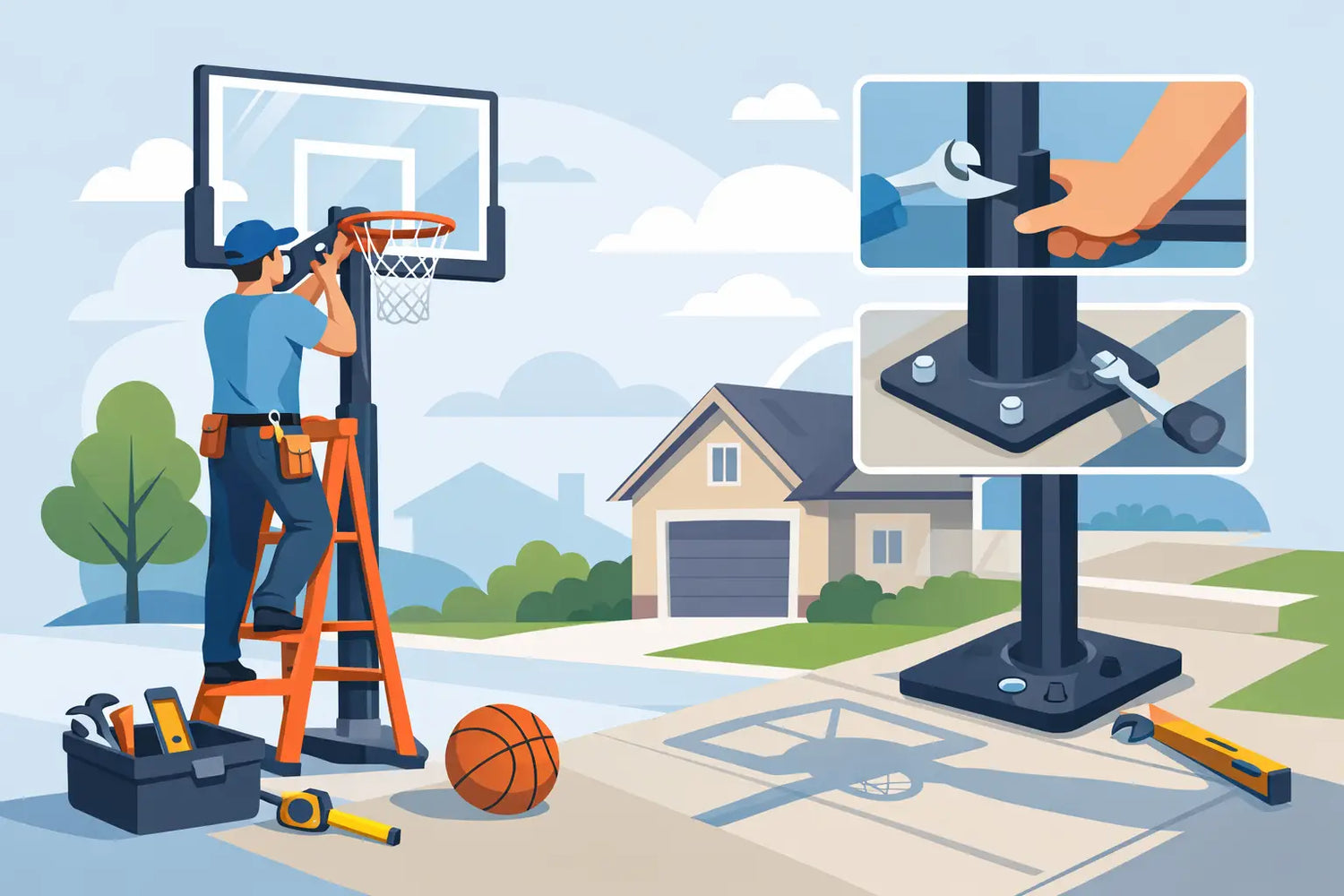
A great backyard basketball setup starts before the first shot goes up. The best basketball hoop installation guide is not just about attaching parts and pouring concrete. It is about choosing the right location, getting the foundation right, and making sure your goal performs safely for years in North Carolina weather.
For most families, the biggest mistake happens early. They pick the hoop first and think about placement later. That usually leads to awkward court angles, poor drainage, or a goal that crowds the driveway and limits play. If you want a clean look, dependable performance, and room for real games, installation planning matters just as much as the equipment itself.
What this basketball hoop installation guide should help you decide
Not every home needs the same setup. Some families want a premium in-ground goal at the edge of the driveway with enough overhang for layups. Others want a court area that keeps play away from parked cars, landscaping, or the garage door. Schools, churches, and community spaces often need something even more durable, with heavier use and more demanding safety expectations.
That is why a basketball hoop installation guide needs to cover more than assembly. You need to think about how the goal will be used, who will be using it, and how much long-term performance matters. An in-ground hoop costs more up front than a portable unit, but it usually delivers better stability, cleaner rebound, and a more premium playing experience. For families investing in their home and outdoor space, that trade-off often makes sense.
Start with location, not hardware
The ideal spot is level, open, and far enough from traffic areas to allow safe movement around the hoop. In many backyards, the driveway is the natural choice because it already gives you a hard playing surface. But not every driveway is a good court. Steep slopes, narrow widths, and tight garage clearance can limit shot angles and create safety issues.
A common rule of thumb is to leave enough space in front of the hoop for free-throw range and game play, with room on both sides for movement. You also want enough distance behind the backboard support so players are not crashing into the pole during drives to the basket. This is one reason premium in-ground systems with proper overhang are so popular. They move the pole farther behind the backboard, which makes play safer and more realistic.
Drainage is another factor homeowners often overlook. If water pools where the concrete footing will go, that can affect long-term stability and surface conditions around the base. In Eastern North Carolina, where heavy rain and seasonal weather swings are part of life, site selection should always account for runoff and soil conditions.
Why the footing matters more than most people expect
If the goal is the star, the concrete footing is the part doing the hard work. A high-quality in-ground basketball system depends on a properly sized, properly cured foundation. This is what keeps the pole stable under repeated play, wind load, and years of use.
The exact dimensions of the footing depend on the manufacturer and hoop model. Premium residential and commercial-grade systems typically specify the width and depth required for safe support. Those specs are not suggestions. If the hole is too shallow or the concrete is rushed, you may end up with movement in the pole, uneven performance, or early wear.
Curing time also matters. Families are often eager to get the hoop assembled the same day the concrete goes in, but that is not always the right move. Concrete needs time to set and gain strength. Skipping that waiting period can compromise the installation before the first game even starts.
This is where professional installation has real value. It is not just convenience. It is accuracy. Experienced installers know how to position the anchor system, check alignment, account for grade, and follow manufacturer requirements so the hoop performs the way it was designed to perform.
Choosing the right height, backboard, and overhang
A basketball hoop is not one-size-fits-all. If you are buying for younger children and expect them to grow into the system, an adjustable-height goal is often the smart choice. It gives kids a better early playing experience while still allowing regulation height as they get older. For families with a wide age range, adjustability keeps the hoop useful longer.
Backboard size affects play more than many buyers realize. Larger backboards provide a more gym-like feel and better rebound performance, especially for bank shots. They also tend to look more substantial in a premium outdoor setting. Smaller backboards can work in tighter spaces, but there is usually a trade-off in play quality.
Overhang is another feature worth paying attention to. More overhang means more room under the basket. That matters for safety, comfort, and realistic play. If your goal will see regular use from teens, adults, or serious young players, this is one feature you do not want to undersize.
Assembly is only one part of the job
Many homeowners assume installation is mostly a matter of following instructions. In reality, a quality in-ground setup includes layout, excavation, concrete work, anchor placement, pole assembly, backboard installation, rim adjustment, and final leveling. If any of those steps are off, the whole system can feel less solid.
Backboard alignment is a good example. Even a small installation error can leave the hoop looking crooked from the street or playing slightly off. With a premium backyard investment, appearance matters along with performance. The goal should feel integrated into your outdoor space, not like an afterthought.
There is also the issue of tools and labor. These systems are heavy. Backboards, poles, and rims can be difficult to maneuver safely without the right crew. For many families, the DIY route sounds manageable until the materials arrive and the scope becomes clear.
DIY versus professional installation
There are homeowners who are comfortable handling excavation, concrete, and full assembly. If you have the tools, the time, and experience reading technical installation specs, a DIY project can work. But it is best suited to those who understand what happens if the footing is wrong, the anchor is out of square, or the hoop is installed before the base is fully cured.
For most buyers choosing a premium in-ground goal, professional installation is the better fit. It saves time, reduces risk, and protects the quality of the investment. It also helps ensure the system is installed in a way that supports warranty expectations and long-term performance.
That matters even more for schools, churches, and community properties. In those settings, safety, durability, and dependable setup are not optional. A hoop that sees daily use needs to be installed to a higher standard than a casual recreational setup.
Planning for your property and your family
The best installation is one that fits how your family actually lives. If your driveway doubles as the main parking area, you may want the hoop placed to preserve daily convenience. If younger kids will use the space, think about nearby visibility from the house and how the court area connects to the rest of the backyard. If appearance matters, placement should also complement the home rather than dominate it.
This is where showroom guidance and local expertise can make the process much easier. A provider that understands premium backyard equipment, regional weather, and installation logistics can help you avoid expensive guesswork. For families across Raleigh and Eastern North Carolina, that kind of support turns a high-consideration purchase into a much smoother one.
Rainbow Play of NC works with families and organizations that want more than a box on the driveway. They want the right goal, installed the right way, with confidence that it will hold up over time.
A few mistakes worth avoiding
The most common installation problems are predictable. One is choosing a hoop based only on price, then regretting the lack of stability or rebound quality. Another is installing too close to the garage, vehicles, or landscaping. A third is underestimating the foundation requirements and treating concrete work like a small weekend task.
There is also the mistake of buying for today only. If your children are young, it may be tempting to choose a smaller or lighter-duty system. But if you plan to stay in your home for years, a premium adjustable in-ground goal often makes better sense. It grows with your family and delivers a better experience from the start.
A basketball hoop should invite play, not create frustration. When the location is right, the footing is solid, and the system is matched to the space, the result feels effortless. That is what most families are really buying - not just a goal, but a backyard feature that gets used often and holds up beautifully over time.
If you are planning a new hoop, think past the box and the parts. The right installation is what turns a good product into one of the most used spots at home.