
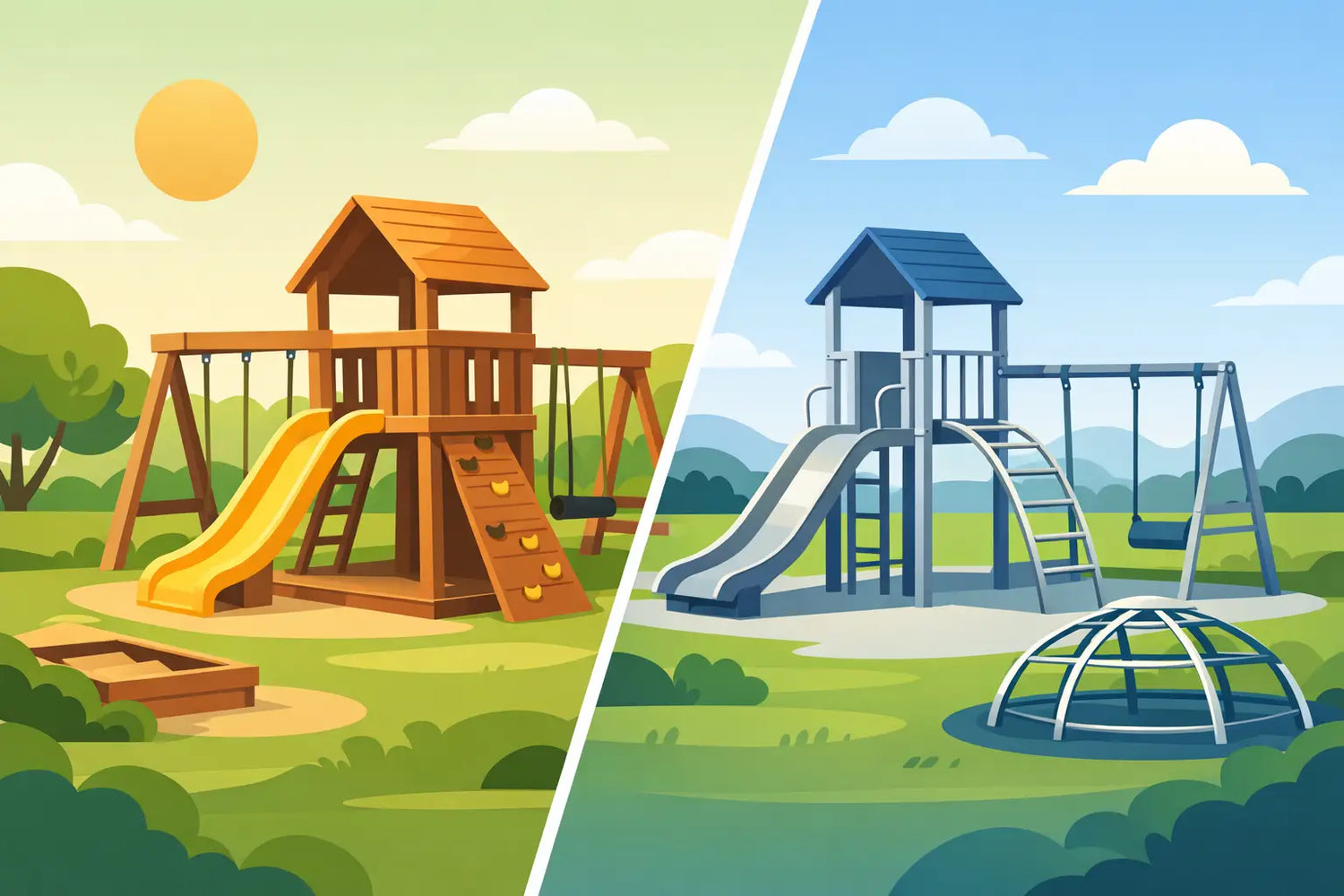
That decision usually gets real the moment you picture the playset in your yard. Not on a product page, but next to the patio, under the shade tree, and in the same space where your kids will climb, slide, and spend the next several years growing up. When families compare a wooden playset vs metal playset, they are not just comparing materials. They are choosing how they want their backyard to look, how the structure will feel in daily use, and how much long-term value they expect from the investment.
For many North Carolina families, this is less about finding the cheapest option and more about choosing the right one. A playset needs to feel safe, hold up in changing weather, and still make sense a few years from now when your children are bigger, stronger, and more adventurous.
Wooden playset vs metal playset: The biggest difference
The biggest difference comes down to experience. Wooden playsets usually feel more substantial, more residential, and more customizable. Metal playsets are often chosen for their simpler look, lighter frame, and lower upfront cost in many mass-market categories.
That does not automatically make one better than the other. It depends on your priorities. If you want a premium backyard feature that feels like a natural extension of your home, wood tends to stand out. If you are looking at a basic play structure for lighter use and a tighter budget, metal may be the first material you consider.
Where many homeowners get stuck is assuming all playsets perform the same once installed. They do not. Material affects heat retention, stability, maintenance expectations, appearance, and the way kids interact with the structure over time.
Safety and comfort matter more than most parents expect
Safety is usually the first concern, and rightly so. But comfort also plays a big role in how often children actually use a playset.
Wooden playsets tend to stay more comfortable to the touch in direct sun than many metal surfaces. During hot North Carolina summers, that can make a real difference on handrails, platforms, and other contact points. Parents often think first about slides and swings, but kids put their hands everywhere. A material that stays more temperature-friendly can support a better everyday play experience.
There is also the issue of feel under movement. Premium wooden playsets often have a heavier, more anchored presence. That can create a more solid experience when children are climbing, swinging, or playing with multiple kids at once. A well-built wooden structure can feel less rattly and more confidence-inspiring, especially for families who want a substantial setup rather than a lightweight frame.
Of course, safety is not just about material. Design, hardware quality, surfacing, spacing, and professional installation all matter. A well-installed playset with proper safety planning will always outperform a poorly assembled one, regardless of whether it is wood or metal.
Durability in real backyard conditions
When customers ask about durability, what they usually mean is this: will it still look good and perform well after years of weather, active play, and changing family needs?
Wooden playsets have a strong reputation for long-term durability when built from quality materials and maintained properly. Premium wood systems are designed for years of use and often support more expansive layouts, from swings and slides to clubhouses, monkey bars, and add-on accessories. They are especially appealing to families who want a playset that grows with their children instead of being outgrown too quickly.
Metal playsets can resist some issues that people associate with natural materials, but they come with their own considerations. Depending on quality and finish, metal may be vulnerable to rust, chipping, or surface wear over time. In lower-end products, lighter tubing and simpler connections can also affect how solid the structure feels after repeated use.
In a climate like Eastern North Carolina, where humidity, rain, and summer heat are part of the package, build quality matters more than marketing claims. A premium product with professional installation is usually the smarter long-term choice than a lower-cost option that looks good in the box but struggles after a few seasons.
Appearance and home value perception
Backyard play equipment takes up visual space. That matters more than many homeowners expect.
A wooden playset often blends better with landscaping, fencing, decks, and the overall character of a home. It tends to look more intentional, especially in well-kept suburban backyards where outdoor spaces are designed as part of the home experience. For families investing in patios, pools, and outdoor living areas, wood usually feels like the more polished fit.
Metal playsets can work well in certain settings, especially when the goal is simple function over appearance. But for many homeowners, they can feel more temporary or less integrated with the yard. If aesthetics matter to you, and for many premium buyers they do, wood usually has the edge.
That visual quality also affects how the playset is perceived over time. A substantial wooden structure can feel more like a lasting backyard feature than a short-term toy purchase.
Maintenance: honest expectations
This is where some of the most common myths show up.
Yes, wooden playsets require maintenance. They should be inspected regularly, and depending on the finish and exposure, they may need care to keep them looking their best. That said, many families are comfortable with this trade-off because they value the structure, appearance, and longevity they get in return.
Metal playsets are often described as lower maintenance, but that does not mean maintenance-free. Hardware still needs inspection. Surface wear still happens. Rust protection, coating condition, and structural stability still matter. A lighter-duty system can also show age faster in ways that are harder to ignore, even if the maintenance checklist looks shorter on paper.
The more useful question is not which one requires zero effort, because neither does. It is whether the upkeep feels reasonable for the quality and years of use you expect to get.
Wooden playset vs metal playset for growing families
If you have toddlers, almost any playset can seem big at first. The better question is what happens when those toddlers turn into energetic grade-school kids who want to climb higher, swing harder, and invite friends over.
This is where wooden playsets often separate themselves. They are frequently built for broader features, higher weight capacities, and more expandable designs. That can make them a better fit for families planning to stay in their home and wanting a play system that keeps pace with their children.
Metal playsets are often adequate for younger kids and simpler play patterns, but some families find they outgrow them faster. If you already know your backyard will be a major gathering place, it makes sense to think beyond year one.
For schools, churches, and community spaces, the calculation is even more practical. Heavy use, multiple age groups, and long service life usually call for commercial-grade equipment and expert planning rather than a one-size-fits-all material decision.
Cost versus value
Price matters, but value matters more.
Metal playsets often win the upfront price comparison, particularly in entry-level categories. That can be appealing if you are shopping quickly or trying to stay under a strict budget. But lower initial cost does not always mean better value over time.
A premium wooden playset typically costs more because it offers more - more structural presence, more design options, more long-term usability, and often a better overall backyard experience. For homeowners who want a playset that lasts, looks great, and supports years of active family use, that investment can make strong sense.
This is also where expert guidance helps. When families visit a showroom and compare materials, dimensions, features, and warranties in person, the decision usually becomes clearer. A large purchase feels more comfortable when you can see the quality difference rather than guessing from photos.
Which one is right for your backyard?
If you want a premium look, stronger backyard presence, and room for your playset to grow with your family, wood is usually the better fit. If your top priority is lower initial cost and a more basic setup, metal may check the box.
For many homeowners in Raleigh, Cary, Apex, Durham, Chapel Hill, Wake Forest, and surrounding areas, the decision comes down to how they use their home. If the backyard is a major part of family life, a wooden playset often delivers the better long-term experience. It feels more substantial, looks more at home in the landscape, and supports the kind of everyday use that makes an outdoor investment worthwhile.
At Rainbow Play of NC, that is why so many families shopping for premium backyard play systems end up leaning toward wood. They are not just buying a structure. They are creating a place their kids will use for years, with professional installation and expert support that makes the whole process easier.
The best choice is the one that fits your yard, your children, and your standards today, while still making sense when you look out the window three summers from now.