
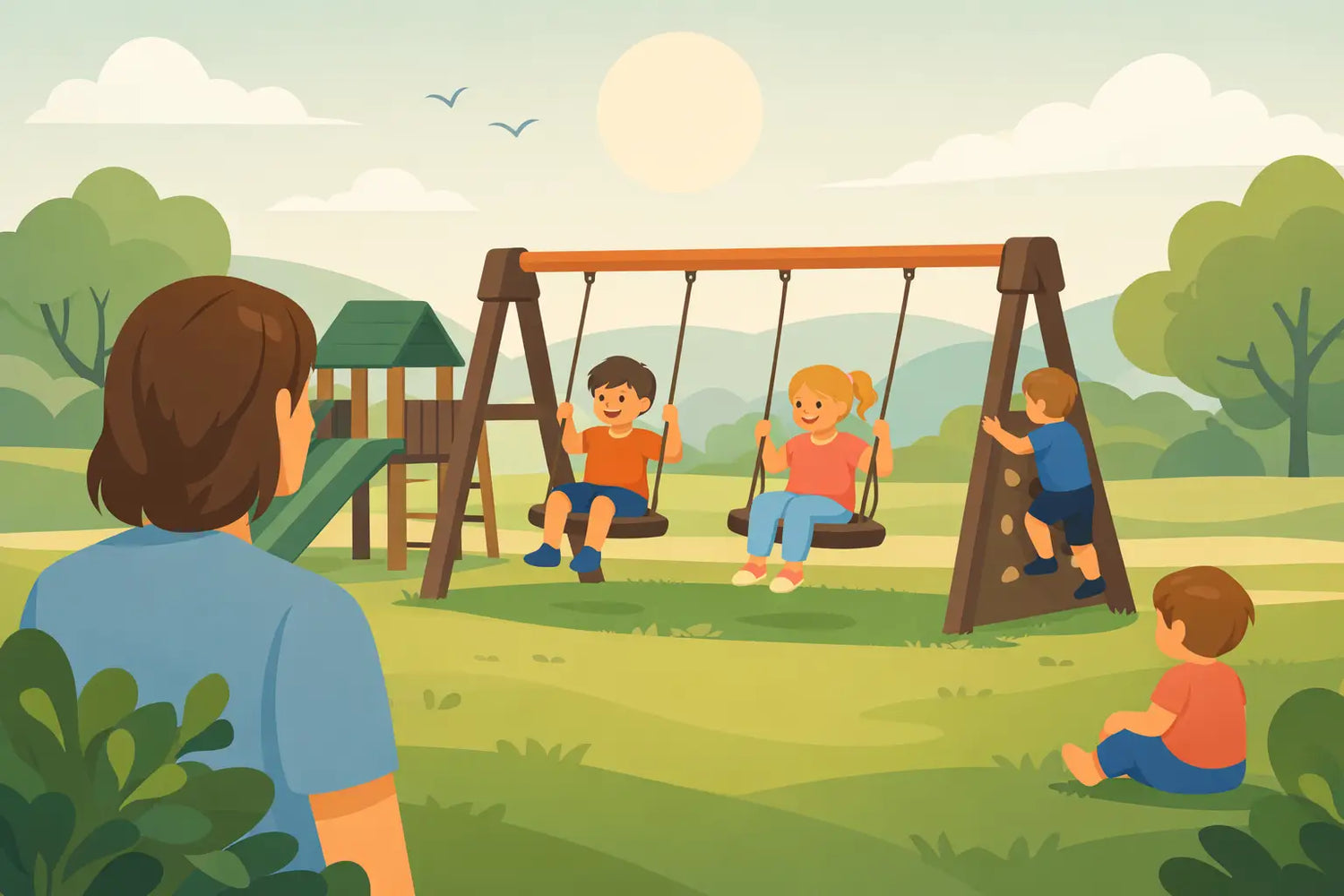
One child is fearless at age 2, while another is still cautious at 4. That is why the question what age for swing sets does not have a one-size-fits-all answer. The right time depends on your child’s development, the design of the swing set, and how well the equipment matches your backyard and supervision plan.
For most families, swing sets become a realistic option during the toddler years, but not every swing set is built for toddlers. Some are designed for very young children with bucket swings, low platforms, and enclosed sides. Others are better suited for older kids who can climb confidently, follow safety rules, and handle more height and movement. Choosing well at the start can give your family years of safe play instead of a setup your child outgrows too quickly.
What age for swing sets is usually appropriate?
In general, many children can begin using age-appropriate swing set features around 18 months to 2 years old, but only with the right seat style and close adult supervision. At that stage, a full bucket swing with leg openings and a high back is usually the safest entry point. Toddlers may enjoy gentle swinging long before they are ready for ladders, monkey bars, or taller slides.
By ages 3 to 5, many children are ready for more of the playset, especially low decks, short slides, climbing steps, and beginner swings. This is often the age when families start shopping for a complete backyard play system rather than a single swing. Even then, the best choice is one that includes features sized for younger users, not just the biggest structure that fits the yard.
From ages 5 to 8, children generally gain the coordination, grip strength, and confidence needed for more challenging play. Belt swings, rock walls, taller slides, and more active climbing elements often become a better fit. By this stage, many parents are less concerned with whether their child is old enough for a swing set and more focused on whether the set is sturdy enough to keep up.
Older children, typically 8 and up, can still get plenty of value from a premium swing set, especially if it includes features that support active play rather than only toddler-focused elements. Larger decks, climbing walls, monkey bars, and add-ons can keep the structure interesting longer. That matters when you are making a higher-end investment and want the set to serve multiple age ranges over time.
Age matters, but development matters more
If you are asking what age for swing sets is right for your child, start with physical readiness instead of the birthday alone. Can your child sit upright steadily? Hold on with both hands? Climb steps without frequent falls? Follow simple directions like waiting for a turn or staying seated while swinging? These signs often tell you more than age labels.
Confidence is part of the equation too. A child who likes motion may take to swings quickly, while a child who feels unsure at heights may need a slower introduction. Neither is wrong. The goal is not to rush play milestones. It is to match the equipment to the child so outdoor play feels fun, safe, and repeatable.
This is one reason premium play systems often make sense for families planning ahead. Better designs give parents more flexibility to choose age-appropriate features now while leaving room for bigger challenges later. Instead of replacing the entire setup in a few years, you can often build around a strong core system.
What to look for by age group
For toddlers, lower is better. Look for bucket swings, low platforms, wide steps, easy-grip handrails, and slides with gentle slopes. Enclosed play areas can also help younger children feel secure. At this stage, simpler play is usually safer and more enjoyable than a large structure packed with advanced features.
For preschoolers, you can begin adding variety. Belt swings may still be too advanced for some 3-year-olds, but beginner climbing elements, small rock walls, steering wheels, activity panels, and taller slides can be a good fit. This is often the sweet spot for families who want a backyard playset that feels exciting now and still has room to grow.
For school-age kids, durability becomes even more important. Bigger swings, stronger beams, more active climbers, and heavier-use accessories should be built to handle years of energetic play. Kids in this age range are harder on equipment, and that is where construction quality really shows.
If siblings of different ages will share the set, the best solution is usually a system with a mix of features rather than a set aimed at only one child. A toddler swing alongside a standard belt swing, for example, can make the space more useful for the whole family.
Safety is not just about the set itself
When parents ask what age for swing sets makes sense, they are often really asking a safety question. The answer depends on installation, spacing, surfacing, and supervision just as much as the swing set design.
A well-built playset needs proper clearance around swings and slides, stable anchoring, and enough room for kids to move without crowding into fences, patios, or landscaping. Ground conditions matter too. Grass alone may not provide the cushioning many families expect, especially in heavy-use landing areas. Safer surfacing options can make a meaningful difference.
Professional installation also removes a lot of guesswork. With premium backyard equipment, assembly is not just a matter of putting pieces together. Correct leveling, anchoring, hardware tightening, and spacing all affect long-term safety and performance. For families investing in a large wooden play system, expert installation can be just as valuable as the product itself.
How long should a swing set last for your family?
This is where many buying decisions go wrong. Parents shop for the child they have today but forget to think about the next five to ten years. A small starter set may cost less upfront, but if it is outgrown quickly, it may not be the best value.
A better question than what age for swing sets is this one: how many years of use do you want from the investment? If your oldest child is 3 and your youngest is not yet walking, a system that supports a wide age range may give you much better long-term value than a toddler-only model.
That does not mean you should buy the tallest, most advanced structure available. It means choosing a quality system that can meet your children where they are now and still feel relevant as they grow. Adjustable features, accessory upgrades, and strong materials all help extend the useful life of the playset.
Backyard size, budget, and usage all affect the answer
The right age for a swing set also depends on how your family plans to use it. If you want a simple place for one toddler to swing under supervision, your needs will be very different from a household with three children, frequent playdates, and a long-term plan for an active backyard.
Space matters more than many buyers expect. A compact yard may call for a carefully selected footprint with fewer but better-designed features. A larger property may allow for a more expansive setup that serves children over a broader age range. In both cases, quality tends to matter more than packing in the highest number of accessories.
Budget plays a role too, but there is a difference between cost and value. Premium swing sets are built for stability, weather resistance, and repeated use. For many families, that translates into fewer concerns about wobble, wear, and early replacement. Financing can also make a higher-quality purchase more manageable when you are planning for years of use instead of one season.
When to wait a little longer
Sometimes the best answer is not yet. If a child cannot sit securely, has very limited balance, or becomes overwhelmed by movement and height, waiting can be the right call. The same goes for families who do not yet have a safe installation area or enough room for proper clearances.
There is no prize for starting early. Outdoor play should build confidence, not create avoidable fear or frustration. A child who is not ready this season may be fully ready by next year, and a better fit usually leads to safer, happier play.
Choosing with confidence
For most families, swing sets can be introduced in the toddler years with the right safety features, then expanded into a much bigger backyard play experience during the preschool and elementary years. The best choice is not based on age alone. It comes from matching the child, the equipment, and the space.
That is why working with a local play expert can make the process easier. At Rainbow Play of NC, families often find that seeing premium sets in person helps them judge scale, feature fit, and long-term value much better than shopping from photos alone. When you can compare options, ask questions, and plan for professional installation, it becomes much easier to choose a set your family will enjoy for years.
The right swing set should feel like it belongs in your backyard and in your family’s routine, not like a temporary fix you will need to replace as soon as your child grows a little taller.