
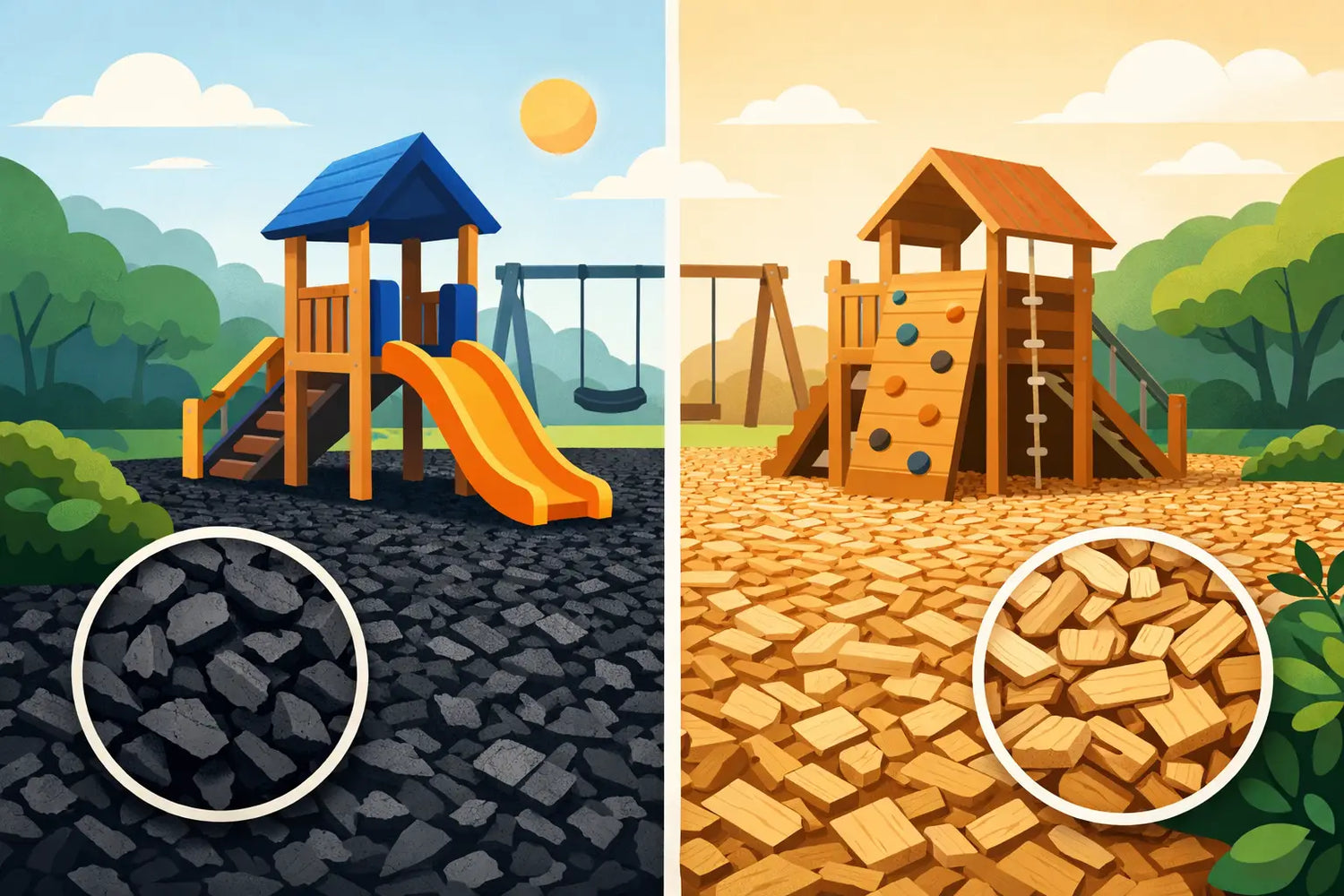
A backyard playset can look perfect on day one and still fall short where it matters most - underfoot. When families compare rubber mulch vs wood chips, they are usually asking a bigger question: which surface will keep kids safer, look better longer, and require less hassle over time?
That is the right question to ask. Surfacing is not a small finishing touch. It affects fall protection, drainage, maintenance, appearance, and how your play area holds up through North Carolina heat, rain, and everyday use. If you are investing in a premium play system, the material beneath it deserves the same level of thought.
Rubber mulch vs wood chips: the main difference
The biggest difference between rubber mulch and wood chips is longevity. Rubber mulch is engineered to last longer, maintain more consistent depth, and resist decomposition. Wood chips are a more traditional option with a lower upfront cost, but they break down over time, compact, and need replenishment.
For many homeowners, the choice comes down to budget now versus maintenance later. For schools, churches, and childcare settings, it often comes down to consistency, compliance, and how much wear the area will see in a typical week.
Neither option is automatically right for every project. The better choice depends on how often the play area is used, how polished you want it to look, and whether you want a lower initial spend or fewer replacements down the road.
Safety matters more than appearance
If your primary goal is to create a safer landing zone under swings, slides, and climbing features, both materials can help when installed at the proper depth. That said, they do not perform exactly the same in real-life conditions.
Rubber mulch tends to stay in place better than loose wood chips. It does not compact as quickly, which helps preserve impact attenuation over time. In a busy backyard or commercial play space, that consistency matters. A surface that starts at the right depth but settles unevenly can become less protective in high-traffic zones.
Wood chips can still be an effective safety surface, especially when they are playground-grade and properly maintained. The issue is that they shift, scatter, and decompose. Around slide exits and under swings, you may notice thinner spots more quickly. That means more regular raking, topping off, and checking for depth.
For families who want less day-to-day upkeep, rubber mulch often feels like the more dependable option. For buyers who are comfortable maintaining the area and refreshing material as needed, wood chips can still do the job well.
How each surface handles weather in North Carolina
Eastern North Carolina weather is not gentle on outdoor materials. Heavy rain, humidity, strong sun, and seasonal storms all put pressure on surfacing choices.
Rubber mulch drains well and does not absorb moisture the way wood does. After a storm, it typically dries faster and does not contribute to the same level of decay or mildew concerns. That can be appealing for families who want the play area ready again quickly.
Wood chips also allow drainage, but they naturally retain moisture and break down over time. In wet conditions, they can become messy and may require more attention to keep the area level and clean. In a shaded yard, that breakdown can happen even faster.
Heat is another factor. Some parents worry that rubber mulch will get hotter in direct sun. That concern is valid. On very sunny summer days, rubber can feel warmer than wood fiber or chips. If your playset sits in full afternoon sun, surface temperature is worth considering. Shade from trees, a canopy, or strategic placement can help, but it is part of the trade-off.
Appearance and curb appeal
A premium playset deserves a surface that looks intentional, not temporary. This is one reason many homeowners lean toward rubber mulch.
Rubber mulch usually offers a cleaner, more finished look. It is available in colors that stay more consistent over time, and it does not fade into a worn, natural debris look as quickly as wood chips can. Around high-end wooden play systems, it can create a polished, built-to-last appearance.
Wood chips bring a more natural aesthetic, which some families prefer in landscaped backyards. They can blend nicely with wooded lots, garden beds, and rustic outdoor designs. The challenge is that they rarely keep that fresh appearance for long. As they weather, they often look uneven, faded, and more obviously worn.
If presentation matters because you are designing a backyard that adds value to the home or complements other outdoor upgrades, rubber mulch often has the stronger visual payoff.
Rubber mulch vs wood chips on maintenance
This is where the difference becomes obvious after the first season.
Rubber mulch is generally lower maintenance. It does not decompose, attract insects the same way organic material can, or require frequent replacement. You may still need occasional raking and redistribution, especially in active play zones, but the overall workload is lighter.
Wood chips need more attention. They break down, blow out of place, and can develop thin areas faster. Depending on usage and weather exposure, replenishment may be needed regularly to maintain both appearance and safety depth. For some families, that ongoing upkeep is fine. For others, it becomes one more outdoor task that never quite goes away.
Institutional buyers often see this clearly. A church playground or childcare center with daily traffic may burn through wood surfacing faster than expected. In those settings, the lower-maintenance profile of rubber mulch can make more operational sense.
Cost now versus cost over time
Wood chips usually win on upfront price. If you are trying to complete a play area on a tighter immediate budget, they can be an accessible way to add protective surfacing without a large initial investment.
Rubber mulch costs more at the start. That can create hesitation, especially when paired with the purchase of a premium playset, borders, and installation. But cost should be viewed over the full life of the play area, not just at checkout.
Because rubber mulch lasts longer and typically needs less replenishment, the long-term value can be stronger. Wood chips may look like the budget-friendly option until you factor in recurring top-offs, labor, and the reality of keeping the area safe and presentable year after year.
This is one of those situations where the cheapest option is not always the lower-cost option.
Which is better for backyard playsets?
For most premium residential playsets, rubber mulch is the stronger fit if you want long-term performance, a cleaner look, and less maintenance. It matches the priorities many homeowners already have when they invest in quality outdoor equipment: durability, safety, and convenience.
Wood chips may still make sense if you prefer a natural appearance, have a smaller play area, or want to keep initial costs lower. They can work well when the family is willing to monitor depth and refresh material as needed.
If the playset will see heavy weekly use, multiple children, or frequent entertaining, rubber mulch often earns its price. It simply holds up better under active family life.
What schools, churches, and childcare centers should consider
Commercial and institutional spaces need to think beyond appearance and purchase price. Consistency, wear tolerance, and maintenance schedules matter more when dozens of children are using the area regularly.
In those environments, rubber mulch often offers better long-term efficiency. It helps maintain a more uniform surface, reduces replacement frequency, and supports a more polished appearance for families, staff, and visitors. That can be especially important when your play area reflects the overall quality of your facility.
Wood chips can still be a valid choice for larger sites where initial budget is the deciding factor. But they usually require more ongoing material management, and that adds labor over time.
The real answer: it depends on how you want to own it
The best surfacing choice is not just about what looks good on installation day. It is about how you want the play area to perform over the next several years.
If you want a surface that stays attractive, requires less replenishment, and supports a more premium backyard experience, rubber mulch is often the better investment. If you are comfortable with periodic replacement and prefer a natural material with a lower upfront cost, wood chips can still be a practical option.
At Rainbow Play of NC, we see this decision as part of the bigger picture. The right surfacing should support the quality of the play system, the safety of the children using it, and the amount of maintenance your family or organization is realistically prepared to handle.
A great play space is not just built around the equipment your kids climb on. It is built from the ground up, with materials that keep up with real life.