
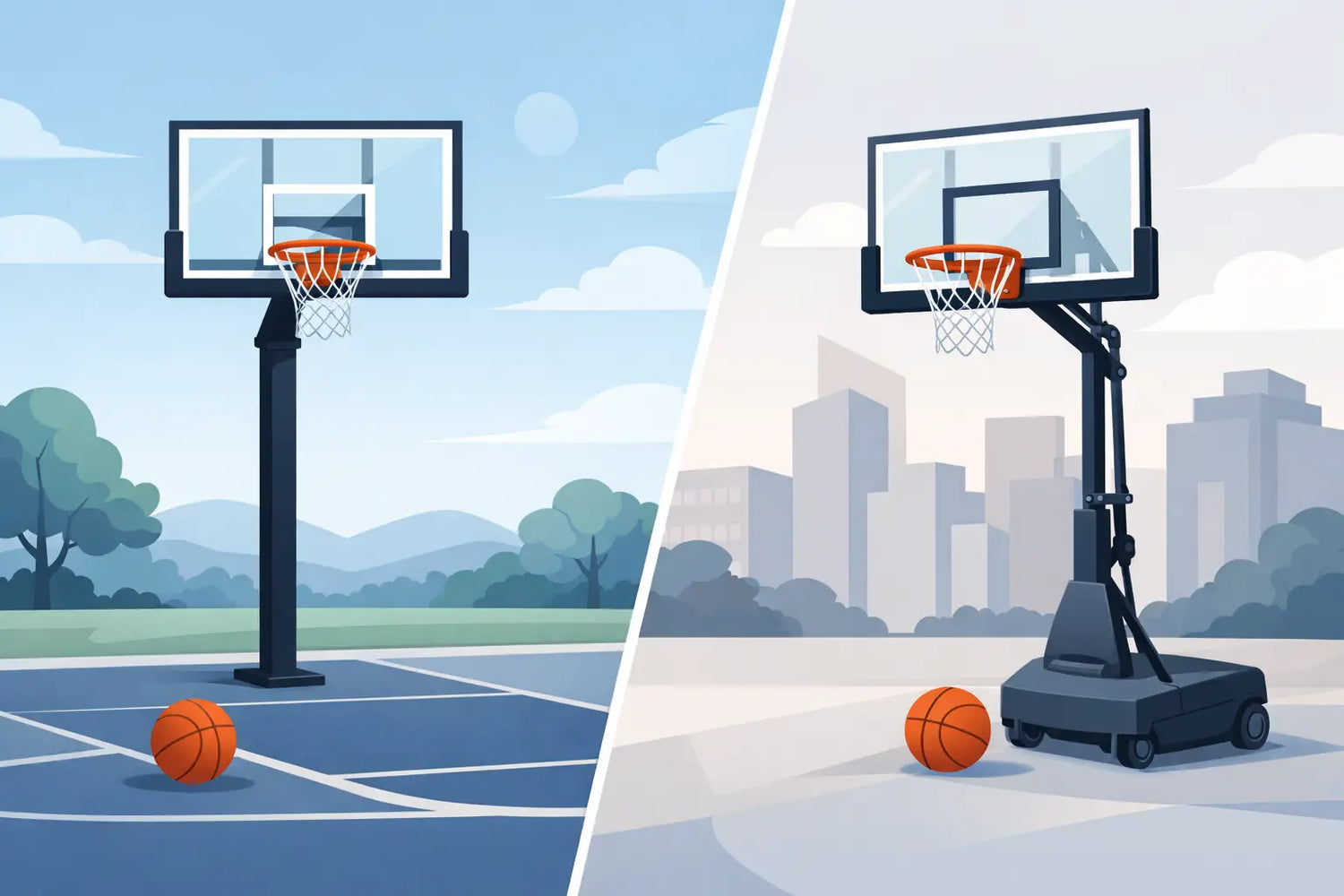
A basketball goal can turn a driveway into the most-used part of your home, but the wrong setup gets frustrating fast. When families compare an inground basketball hoop vs portable model, they are usually balancing three things at once: how serious the play will be, how long they want the goal to last, and how much convenience matters on day one.
For some households, a portable hoop makes sense because it is quick to get in place and easier to move. For others, especially families planning for years of regular use, an in-ground goal delivers a different level of performance, safety, and long-term value. The better choice depends less on a price tag alone and more on how your space will actually be used.
Inground basketball hoop vs portable: the biggest difference
The core difference is in the base. An in-ground hoop is anchored into concrete, creating a permanent structure with far more stability. A portable hoop relies on a plastic base filled with water or sand, which makes setup easier but also introduces more movement during play.
That difference affects almost everything else. It changes how the backboard feels on shots, how much the pole shakes after a rebound, how the system handles rough play, and how confidently parents feel when older kids start playing harder. If you are shopping for a premium backyard setup instead of a temporary solution, this is usually the deciding factor.
Play performance matters more than most buyers expect
A lot of families start by thinking any hoop will do, especially for younger kids. That can be true for light, casual use. But once children grow, friends come over, or parents join in, performance becomes much more noticeable.
An in-ground goal usually offers a more solid rebound and a more consistent playing experience. The pole is steadier, the backboard response feels cleaner, and the whole unit is less likely to wobble after a missed layup or a strong pass off the glass. That creates a court feel closer to what players experience at school, church, or a community gym.
Portable goals can still be fun, but they often flex more. Some movement is normal, especially on lower-end models or larger backboards. If your family has competitive players or teenagers who will use the hoop almost daily, that extra shake can become a real drawback.
Safety and stability in the backyard
For most parents, safety is not a side issue. It is part of the purchase decision from the start.
In-ground hoops have an advantage here because they are permanently secured. There is no large base sitting in the driveway to trip over, and there is less chance of the system shifting during active play. With proper professional installation, the goal stays where it belongs and handles regular use with more confidence.
Portable hoops can be safe when assembled correctly and weighted properly, but they require more vigilance. Bases can lose water, shift over time, or become less secure if they are not maintained. In North Carolina, where weather can swing from summer heat to heavy rain and seasonal storms, that matters. A portable system may need occasional repositioning or rebalancing, especially after strong wind or frequent movement.
For families with multiple kids, neighborhood play, or higher-traffic use, the steadiness of an in-ground system is often worth the added commitment.
Cost upfront versus value over time
This is where the conversation gets more nuanced. A portable hoop typically costs less upfront and does not require concrete installation, so it can look like the budget-friendly winner. If you need something quickly or want a shorter-term option, it may be the right move.
But the lower initial cost does not always mean better value. Portable hoops generally wear out faster, especially with frequent use, sun exposure, and repeated moving. The base, wheels, and adjustment parts tend to experience more stress over time. If your family ends up replacing a portable system after a few seasons, the savings can disappear.
An in-ground goal usually costs more at the beginning because you are paying for a heavier-duty system and installation. In return, you get a stronger product designed for long-term use. For homeowners planning to stay put and invest in a high-quality outdoor space, that longer lifespan often makes the numbers look very different a few years down the road.
How each option fits your property
Your driveway layout, yard size, and long-term plans should all shape the decision. An in-ground hoop works best when you have a clear, dedicated place for it. Once installed, it becomes part of the property, so placement should be thoughtful. That is one reason many homeowners prefer expert guidance before making the final call.
Portable hoops give you more flexibility. You can move them if you need to clear space, change the play area, or take the system with you later. That flexibility is useful for renters, families who may relocate soon, or households that use the driveway for multiple purposes and do not want a permanent goal.
Still, flexibility comes with trade-offs. A portable hoop can be moved, but that does not always mean it will be moved often or easily. Large models filled with sand are not especially convenient to reposition. If the goal is going to live in one spot most of the time anyway, permanence may be more of a benefit than a downside.
Inground basketball hoop vs portable for growing kids
A family with a six-year-old has different needs than a family with middle school or high school players. That sounds obvious, but it is one of the most overlooked parts of this purchase.
If your children are young and you simply want a starter hoop for light shooting, a portable model may serve the purpose. Adjustable height features make it easy to lower the rim and keep the game fun while skills develop.
If you are buying with the future in mind, an in-ground hoop often makes more sense. Kids grow quickly, and so does the intensity of play. What feels perfectly adequate today can feel shaky and undersized in two or three years. Parents who prefer to buy once and buy well often lean toward an in-ground system because it keeps up with the family longer.
Installation is not just a convenience
With premium outdoor equipment, installation is part of the product experience. A basketball goal is only as good as the way it is assembled and positioned.
Portable hoops are usually marketed as easy to set up, but anyone who has wrestled with a large base, heavy backboard, and multiple hardware steps knows that simple is not always the same as easy. If assembly is rushed or done incorrectly, performance and safety can suffer.
An in-ground hoop takes more planning, but professional installation removes guesswork. The right depth, concrete footing, leveling, and placement all affect how the goal performs over time. For homeowners who value convenience, appearance, and peace of mind, expert installation is a meaningful advantage, not an extra.
That is especially true when you are designing a more complete backyard recreation space. A well-placed hoop should feel intentional, not like an afterthought.
Weather, wear, and long-term durability
Outdoor equipment in North Carolina has to handle heat, humidity, rain, and plenty of sun. Durability is not just about the steel pole or the backboard material. It is also about how the entire system holds up season after season.
In-ground goals are generally better suited for long-term exposure because they are built for permanence and repeated use. Higher-quality models are made with thicker poles, stronger anchors, and components that stand up better to active family life.
Portable systems face more stress in everyday conditions. Wind can affect them more. Bases can crack, fade, or become harder to manage over time. If the hoop is regularly rolled around the driveway, wear increases even faster. For occasional use, that may be acceptable. For a backyard centerpiece, many families want something more durable.
Which one should you buy?
If you want the shortest path to getting a hoop up, need flexibility, or are shopping for temporary use, a portable goal can be the right fit. It gives families a chance to add basketball to the driveway without committing to a permanent installation.
If you want stronger performance, better stability, cleaner backyard aesthetics, and a goal built for years of real play, an in-ground system is usually the better investment. That is especially true for homeowners creating a high-quality outdoor space where durability and safety matter as much as fun.
For many families, the real question is not whether a portable hoop is good enough. It is whether you want a starter solution or a long-term one. A well-chosen basketball goal should keep up with your kids, your home, and the way your family actually lives outside. If you are building a backyard your family will use for years, it is worth choosing the option that feels solid every time the ball hits the backboard.