
A trampoline can look surprisingly small in a showroom and surprisingly huge once it lands in your backyard. That is usually the moment families realize how much the right size matters. If you are wondering how to pick trampoline size, the best answer is not simply “buy the biggest one you can fit.” The right choice depends on your yard, your children’s ages, how the trampoline will be used, and how much safety clearance you can realistically maintain.
For most families, trampoline size is a long-term decision, not a quick seasonal purchase. A premium trampoline is meant to deliver years of active outdoor play, so it helps to choose a size that fits your space now and still works as your kids grow. A trampoline that is too small can feel limiting fast. One that is too large for the yard can create safety issues, crowd other outdoor features, and make installation more complicated than it needs to be.
How to pick trampoline size starts with yard space
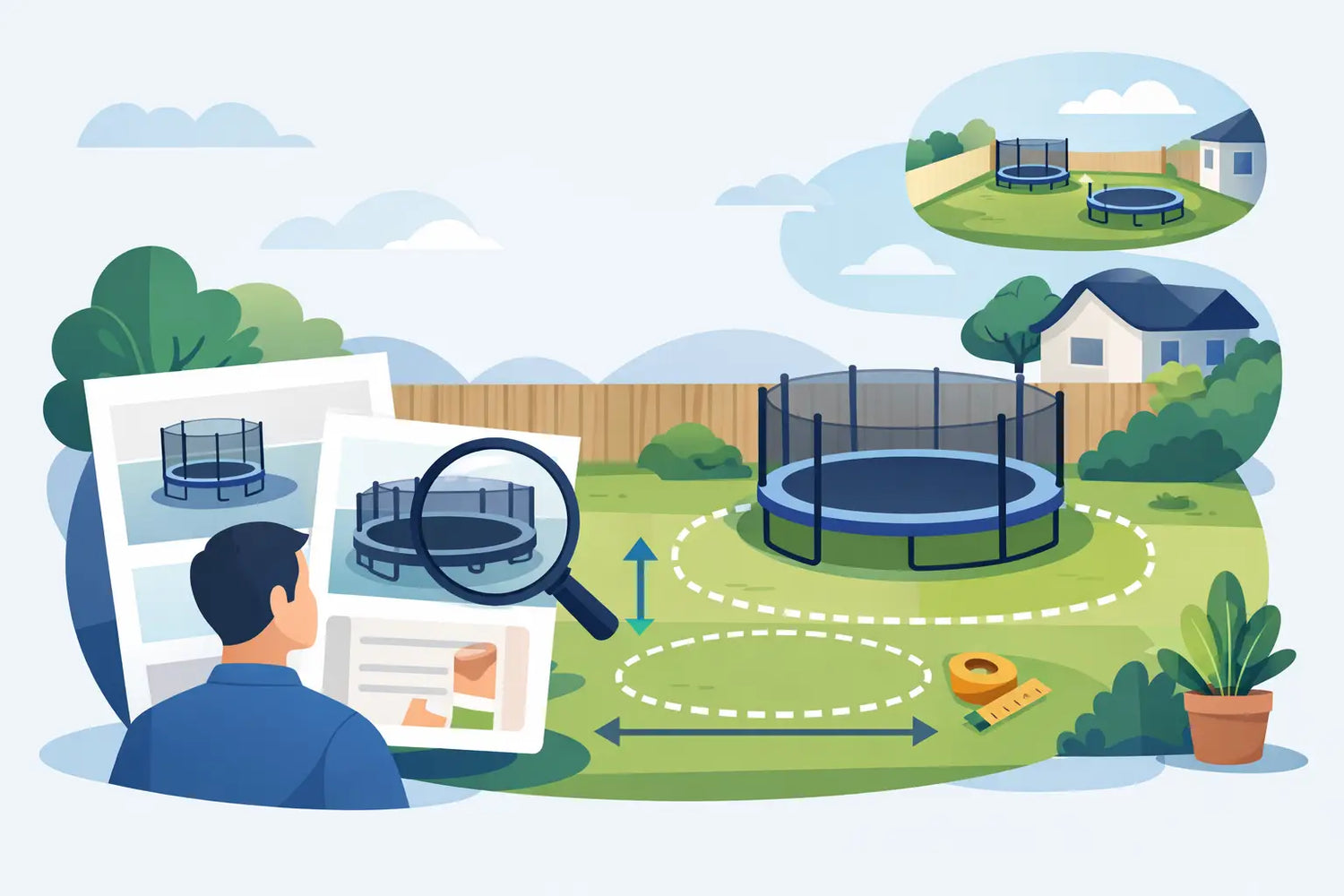
The first measurement that matters is not the trampoline itself. It is the total usable area around it. Families often focus on the frame diameter and forget that safe trampoline placement requires open space on all sides and above the jumping surface.
If your yard includes fencing, trees, patios, playsets, basketball goals, or uneven grading, that affects your true available footprint. A 14-foot trampoline does not just need a 14-foot circle. It needs clearance around the entire unit so jumpers are not too close to obstacles, and so the enclosure system has room to function as designed.
This is especially important in many North Carolina backyards where homeowners want to fit multiple outdoor features into one space. If you already have a wooden playset, a patio, or a future plan for an in-ground basketball goal, think about the overall layout before choosing trampoline size. The cleanest backyard designs leave room for circulation and visibility, not just equipment.
Measure the real play zone, not just the grass
Start with a tape measure and identify the flattest, most open part of the yard. Then account for overhead branches, roof lines, and sloping sections. If the area is technically large enough but crowded or awkward, moving down one trampoline size may create a better and safer result.
A good rule of thumb is to think in terms of the full play zone. The trampoline should feel intentionally placed, not squeezed into a leftover corner.
Match the size to who will use it most
The next step in how to pick trampoline size is understanding the users. A family with one younger child may not need the same size trampoline as a household with multiple school-age kids using it daily. Likewise, a church, school, or childcare setting has different durability and usage demands than a private backyard.
Smaller trampolines often appeal to buyers who want to save space or cost, but they can be outgrown quickly. As children get older, their jumping patterns become more active, and extra mat space becomes more valuable. A larger jumping surface generally gives users a more comfortable experience and can support longer-term satisfaction with the purchase.
That said, bigger is not automatically better for every home. If your children are very young and your yard is modest, a mid-size trampoline may be the sweet spot. It provides enough room for active play without overwhelming the yard.
Think about years of use, not just this summer
One of the most common sizing mistakes is buying only for a child’s current age. Parents naturally picture today’s users, but a quality trampoline is built to last. If you expect your children to use it for several years, choose a size that still makes sense as they grow.
This is where premium equipment earns its value. When the frame, springs, enclosure, and padding are designed for long-term durability, it makes sense to choose a size you will still be happy with later.
Common trampoline sizes and what they suit best
Most family trampolines fall into a few standard size ranges, and each has a different practical feel in the yard.
An 8-foot to 10-foot trampoline is usually best for compact spaces and younger children. It can work well in smaller yards, but the jumping area is limited. Many families find this size feels restrictive once kids get older or more than one child wants a turn in regular backyard play.
A 12-foot trampoline is often the middle-ground option. It fits more yards comfortably, offers a better jumping surface than smaller models, and works well for many families with elementary-age children. If you are balancing usable space, budget, and long-term value, this is often where buyers start.
A 14-foot trampoline is one of the most popular sizes for families who have the yard for it. It gives kids more room to jump, tends to feel less cramped, and often delivers the best mix of comfort and versatility for growing families.
A 15-foot or larger trampoline is ideal for spacious backyards and households that want a more premium backyard recreation setup. If the yard can support it safely, a larger trampoline often provides the best user experience. It also tends to look more proportional in larger suburban lots where smaller models can feel undersized.
Shape matters when deciding how to pick trampoline size
Size is only part of the equation. Shape changes how that size performs.
Round trampolines are the most common for residential use. They are popular because they fit naturally into many backyard layouts and provide a balanced, family-friendly jumping experience. When most homeowners think about trampoline size, they are thinking in round dimensions like 12-foot or 14-foot models.
Rectangular trampolines create a different feel. They often provide a more elongated jumping area and can be a smart choice for specific yard layouts. In some spaces, a rectangular unit may fit more efficiently than a large round model, especially if the placement area is long rather than wide.
Oval designs can also help maximize jumping area while using space differently than a round trampoline. If your backyard has constraints, shape may solve a sizing problem that diameter alone does not.
This is one reason expert consultation matters. On paper, two trampolines may seem similar in size, but the way they sit in a real yard can be completely different.
Safety clearance should drive the final decision
When families ask how to pick trampoline size, they are often really asking how large they can go. A better question is how large they can go while preserving safe clearances and easy access.
A trampoline should not be installed too close to fences, hardscapes, trees, swing beams, retaining walls, or other structures. There should also be enough room to enter and exit the trampoline comfortably. If the only way to fit a larger model is to place it near a hazard or crowd it against another backyard feature, that size is not the right one.
Ground conditions matter too. Soft spots, roots, drainage issues, and uneven terrain can affect placement. Professional installation is especially helpful here because a site can look usable until grading and access are actually evaluated.
For homeowners investing in a premium trampoline, safety systems are not an afterthought. The frame design, enclosure quality, padding, and installation all work together. Choosing a size that supports those features properly is part of making a safer purchase.
Budget matters, but value matters more
There is always a price jump as trampoline size increases, so budget naturally plays a role. But it helps to think beyond the initial ticket price.
A trampoline that is slightly larger and better suited to your family may deliver more years of use and fewer regrets than a smaller model chosen only to reduce upfront cost. On the other hand, paying for the biggest option available is not smart if your yard or usage needs do not support it.
The best value is usually the size that fits your property well, serves your family for the long haul, and can be installed correctly without compromise. That is especially true when you are shopping premium backyard equipment and want professional delivery, setup, and support rather than a temporary solution.
When to get expert help
If you are torn between two sizes, that usually means the decision deserves a closer look. A showroom visit or site-based recommendation can save you from choosing a trampoline that looks right online but feels wrong once installed.
Rainbow Play of NC works with families across Raleigh, Cary, Apex, Wake Forest, Durham, and surrounding areas who want more than a boxed product dropped at the curb. For a purchase like this, expert guidance, trusted brands, and professional installation can make the difference between a backyard upgrade that feels effortless and one that becomes a headache.
The right trampoline size should make your backyard feel more usable, more fun, and more inviting for years ahead. If you can picture your kids running out to it after school, and you know it fits the yard safely and comfortably, you are probably looking at the right size.