
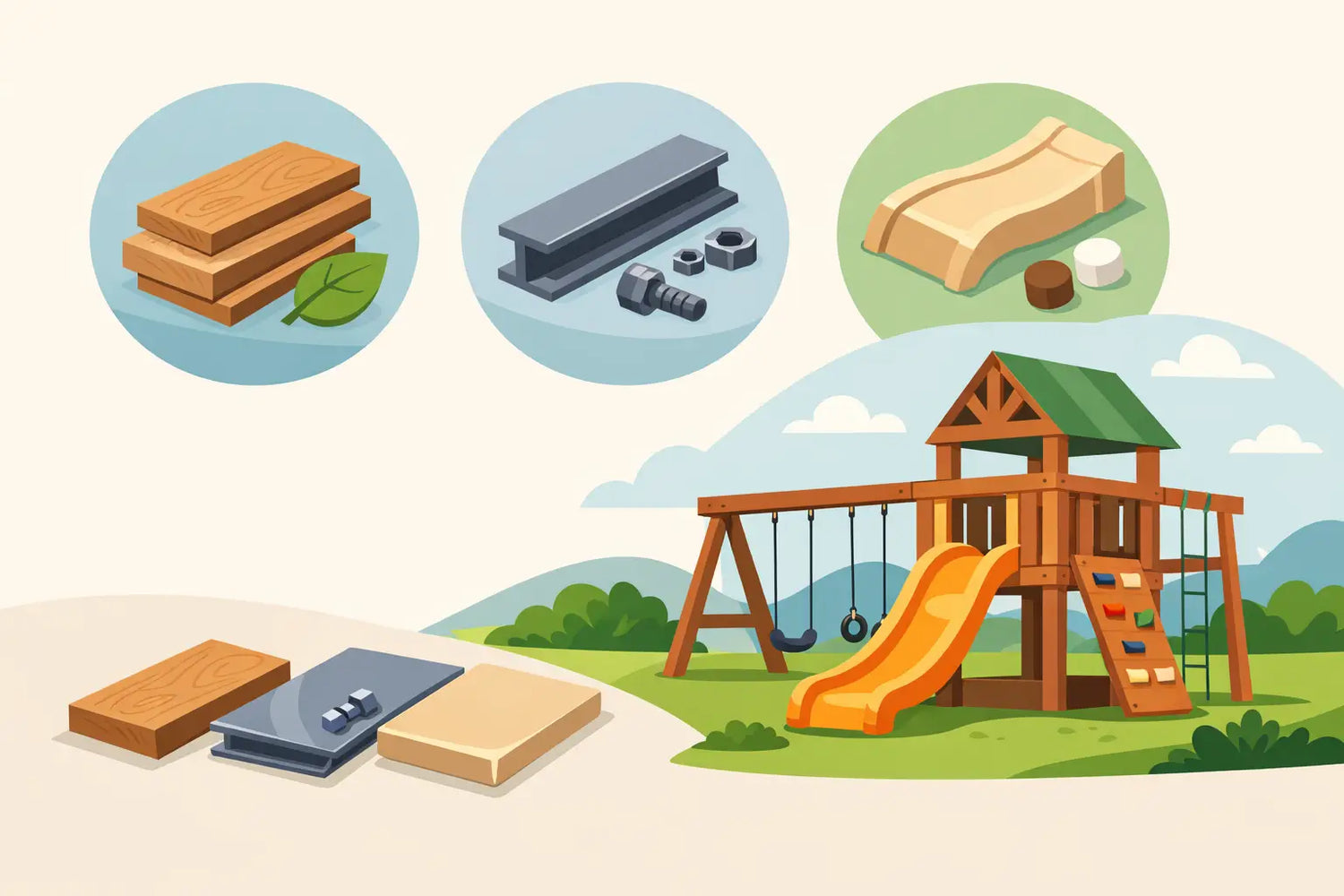
A playset can look perfect in a photo and still be the wrong fit for your backyard. The real question is how to compare playset materials in a way that matches your family, your budget, and how long you want the set to last. Material affects everything from summer heat and yearly maintenance to structural strength, appearance, and long-term value.
For most families, the decision comes down to wood, metal, or plastic, with many premium systems using a combination of all three. Each has strengths. Each also comes with trade-offs. If you are shopping for a backyard playset in North Carolina, it helps to think beyond the first impression and compare how the material will perform through humidity, sun, storms, and years of active use.
How to Compare Playset Materials the Right Way
The best way to compare materials is to stop asking which one is universally best and start asking which one is best for your space. A compact toddler playset has different demands than a large swing set for multiple children. A church or school playground will also need a different level of durability than a residential backyard setup.
Start with five practical factors: safety, durability, maintenance, comfort, and value over time. Those categories tell you much more than a basic product label ever will.
Safety comes first because every parent wants equipment that feels secure and stable. Durability matters because outdoor equipment takes a beating from weather and use. Maintenance affects how much work you will put in each year. Comfort matters more than people expect, especially with hot surfaces and rough edges. Value over time is where premium materials often separate themselves from lower-cost alternatives.
Wood Playsets: Premium Look, Strong Long-Term Appeal
Wood remains the top choice for many homeowners who want a substantial, backyard-ready playset that feels like a permanent upgrade rather than a temporary toy. High-quality wood playsets, especially those made from strong, naturally durable lumber, tend to offer the most classic appearance and the most room for larger, feature-rich designs.
A well-built wooden playset usually feels solid under active play. That stability matters when kids are climbing, swinging, and moving from one activity to the next. Wood also tends to blend well with landscaping, fencing, and outdoor living spaces, which is a big advantage for families who care about curb appeal and want the playset to feel like part of the property.
The trade-off is maintenance. Wood typically needs regular attention to keep it looking good and performing well. Depending on the species, finish, and exposure, that may include staining, sealing, or periodic inspections for cracking, splintering, or surface wear. In North Carolina's climate, moisture and sun exposure can speed up the aging process if the playset is neglected.
That said, premium wooden systems often reward that upkeep with excellent longevity. For families planning to stay in their home for years, wood can be one of the strongest long-term investments, especially when paired with professional installation and proper site prep.
What to look for in a wood playset
Not all wood is equal. Pay attention to the type of lumber, hardware quality, beam thickness, and warranty support. A premium wood system should feel engineered, not flimsy. The finish should be smooth, the fasteners should be heavy-duty, and the design should account for weather exposure and repeated use.
If you want a large fort, multiple climbing features, and a backyard centerpiece that can grow with your children, wood often leads the conversation.
Metal Playsets: Strong Frame, Less Visual Warmth
Metal playsets are often chosen for structural strength and lower routine maintenance. They can be a smart option for families who want a durable frame without the same upkeep demands that come with wood. Powder-coated steel, for example, can hold up well and offer a clean, modern look.
Where metal sometimes falls short is in feel and finish. It can be less visually inviting than wood, and in direct sun, certain components may become hot to the touch. That is not always a deal-breaker, but it is something to consider in a sunny backyard with long summer afternoons.
Metal can also vary widely in quality. Lower-end metal sets may feel lighter, less stable, or more prone to wobble over time. On the other hand, commercial-grade metal systems can be extremely durable and appropriate for schools, parks, and high-traffic spaces. The intended use matters here.
For homeowners, metal may work best when the priority is a simpler structure with strong support and reduced maintenance. For institutional settings, metal is often selected because it can stand up to heavier daily use when designed to commercial standards.
Plastic Components: Low Maintenance, Best as Part of a System
Plastic gets a mixed reputation, mostly because people lump all plastic equipment into one category. In reality, molded plastic components can be very effective when used where they make the most sense. Slides, activity panels, climbing accessories, and steering wheels are common examples.
High-quality plastic resists splinters, does not rust, and is generally easy to clean. It also gives manufacturers more flexibility in shaping features for younger children. For families with toddlers and early elementary-age kids, plastic can feel approachable and low stress.
The limitation is that plastic alone is not always the best choice for a large, long-term play structure. In lower-cost sets, it may fade, become brittle, or feel less substantial over time. That is why many premium playsets use plastic selectively rather than relying on it for the entire structure.
When comparing plastic components, check thickness, UV resistance, color retention, and how securely each part integrates with the overall frame. Good plastic should feel sturdy and purposeful, not hollow and temporary.
Comparing Playset Materials by Real-World Priorities
If your top priority is appearance, wood usually wins. It has a premium look that complements a well-kept backyard and often supports larger, more detailed play designs. If your top priority is lower upkeep, metal and plastic components may reduce seasonal maintenance.
If your top priority is longevity, the answer depends on quality more than category. A premium wooden system can outlast a bargain metal or plastic set by a wide margin. A commercial metal structure can outperform a lightweight residential model just as easily. Material matters, but engineering, hardware, finish, and installation matter too.
If your children are very young, comfort and surface feel may rank higher on your list. Smooth plastic accessories and shaded deck areas can make daily play easier. If you have older children or multiple kids using the set at once, structural stability and deck strength become more important.
For schools, churches, and community properties, heavy use changes the equation. Commercial buyers need to think in terms of code compliance, traffic load, ADA considerations, and lifecycle cost, not just material preference.
Climate Matters More Than Many Buyers Expect
North Carolina weather can be tough on outdoor equipment. Heat, humidity, heavy rain, pollen, and seasonal storms all affect how a playset ages. That is one reason material comparison should always include local conditions.
Wood can perform beautifully here, but only if it is properly maintained and installed on a well-prepared site. Metal needs protective finishes that resist corrosion. Plastic should be UV-stabilized to help prevent fading and breakdown from sun exposure.
Drainage matters too. A great material on a poor site can still lead to problems. Soft ground, standing water, or uneven installation can shorten the life of any playset and affect safety from the start.
Don’t Judge Material Without Looking at Installation
Even the best materials can underperform if the playset is assembled incorrectly. Anchoring, leveling, spacing, and hardware tension all affect stability and safety. That is especially true for larger premium systems, where a proper install helps protect both performance and warranty coverage.
This is where expert guidance makes a real difference. A family may walk in thinking they need the lowest-maintenance option, only to realize that a professionally installed premium wood playset gives them better value and a better backyard experience over time. At Rainbow Play of NC, that conversation often starts with material but ends with a full-picture recommendation based on age range, yard size, and long-term goals.
The Best Choice Usually Isn’t the Cheapest One
Price matters, but first cost and long-term value are not the same thing. A less expensive set may save money upfront and cost more later in repairs, replacement, or disappointment. A premium playset often earns its value through stronger construction, better warranties, safer design, and a longer useful life.
That does not mean every family needs the biggest wooden system on the lot. It means the right comparison should account for how often the playset will be used, how many years you want from it, and whether you want it to remain a strong part of your outdoor space instead of becoming something you replace sooner than expected.
When you compare playset materials carefully, you are really comparing how your investment will feel after five summers, not just how it looks on day one. The best material is the one that fits your children, your property, and your standards for safety and durability - and that is always worth taking the time to get right.